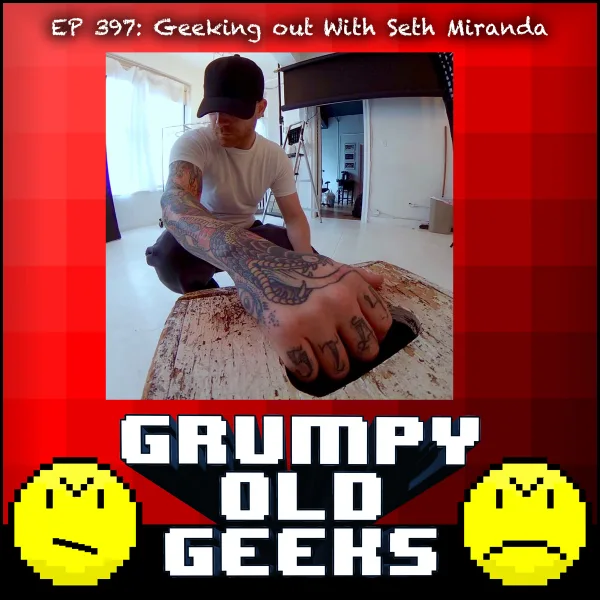
397: Geeking out With Seth Miranda
View episode on the publisher’s site
The publisher’s audio length has changed since transcription. Ads may differ, so timestamps may be offset.
Summary
Jason DeFillippo interviews photographer and educator Seth Miranda while Brian Schulmeister is on vacation. They discuss photography and video equipment, audio recording, teaching, podcasting, and the practical challenges of sharing 360-degree images.
- Miranda discusses professional photography and the demands of producing content.
- The speakers compare phone cameras, dedicated cameras, lenses, color profiles, recording limits, and overheating.
- They emphasize the importance of clear audio in videos and podcasts while comparing microphones and recorders.
- Miranda describes teaching photography at Adorama and seeing students earn money from their work.
- They reflect on the former Grime Life podcast and changes in podcasting.
- They compare the GoPro Max and Ricoh Theta, including image transfers and the difficulty of sharing 360-degree photos.
- DeFillippo describes exercises centered on walking, observing, and taking deliberate photographs.
- Miranda recounts a studio equipment theft and the help fellow photographers provided to complete booked jobs.
Key moments
-
Introducing Seth Miranda
DeFillippo introduces Miranda, his photography work, and their connection through the Grime Life podcast.
-
Photography, Phones, and Cameras
They discuss paid photography, phone image quality, camera equipment, and the demands of shooting video.
-
Recording Audio for Video
They compare portable microphones and recorders and discuss the importance of clear audio.
-
Teaching and Making Podcasts
Miranda discusses teaching photography before the conversation turns to Grime Life and podcasting.
-
GoPro Max and Ricoh Theta
They compare 360-degree cameras and discuss transferring and sharing their images.
-
Sensors and Camera Handling
They discuss sensor sizes, camera responsiveness, and the value of deliberate photography.
-
Studio Theft and Community Support
Miranda describes stolen studio equipment, its partial recovery, and gear lent by fellow photographers.
-
Miranda’s Work at Adorama
Miranda discusses his educational videos and live content for Adorama.
Full transcript
-
At QVC, fall shopping is more than just checking out. It's discovering the brands you love across beauty, fashion, home, and culinary, all in one place. Whether you're getting ready for crisp mornings, cozy nights, or everyday moments, QVC has what you need for the season ahead.
-
With brands like Laura Geller, Philosophy, Ninja, and so many more. Shop now at QVC.com. Hello! I hope you're having a fine morning, day, or evening. Brian is still on vacation, whatever the hell that is.
-
So we're running this episode that I recorded last week with Seth Miranda. Seth is a professional photographer signed to Adorama in New York City, and he's a prolific teacher on social media, and he teaches the art of photography. If you've listened to the show for a few years, you've probably heard us talk about the Grime Life Podcast.
-
Seth was the co-host on that show, along with Christopher Piccione, and it's how we all met. Super cool. This was supposed to be a 15-minute piece inside of another episode, but we got to talking and just forgot to stop, and then Brian decided to stay in Hawaii for an extra day doing God knows what.
-
So you get to hear the entire conversation. We talk about a ton of stuff, and we do get a little gear-heavy at the beginning, but keep listening even if that's not your thing. There's a lot more in here than just cameras, I promise. I really hope you enjoy this departure from our regular fare, and fret not if this is not your cup o' whiskey.
-
The gang will be back together next episode. I hope you enjoy this special episode with Seth Miranda, and oh yeah, as a special bonus, I'm including the entire closing theme song at the end of this episode, written by a friend of the show, Andy Stochansky. So stick around and pleased to enjoy.
-
Grumpy Old Geeks, a weekly talk show hosted by Brian Schulmeister and Jason DeFilippo, discussing the finer points of what went wrong on the internet and who's to blame. We are here with Seth Miranda from Adorama and previously the Grime Life podcast, and that's kind of how we met way back in the day.
-
And Seth is one of my favorite people, and we thought we would have a fun little segment here on the show where we talk about things, I don't know, photography, gaming, whatever. It tickles our fancy because we have similar interests that I think are relevant to the Grumpy Old Geeks audience. Welcome, Seth.
-
Thanks for having me. It's such an honor. I'm actually on your podcast for a change. I know. I think Brian and I did Grime Life three times or two times. Yeah, and we did the battle game and we nerded out a whole bunch of stuff. But we're in the age of content, and I think we're both pumping out a ton of content ourselves across a ton of platforms and creating stuff for other people, right?
-
So I think that's where this kind of fits in. Yeah, well, especially you because you were kind of in between. You were a freelance photographer when we met, and now you're like this juggernaut at Adorama punching out, like how many videos and demos do you do a week? It's, I wish it was stable.
-
I could give you a number, right? Like it's just like they push me in front of a camera and go make this sound cool or teach this, and then you're on to the next thing. But I think the one thing that's making this really plausible is everything's live now. I can just go live.
-
I don't have to edit. I don't have to like worry about planning something out. I can just go and do it. So I think that's why there's so much of it. Well, especially on your Instagram. Every time I go in, you're like walking down the street, giving a deck, like, you know, answering questions. I'm like, Jesus, does this guy ever sleep? Yeah. Yeah. I think I feel like, don't you feel like you'll get erased if you stop?
-
Don't you think like people just forget about things really quickly and they move on to the next? Yeah, kind of. You have to, you have to, you know, feed the beast. You have to keep feeding the beast. Well, you guys split up the podcast into multiple days for the week too, right? Yeah, we did. We, we actually were selling out advertising and we're like, Hey, we should do more.
-
That's the only, that's the only answer. We can't raise the rates of the show, but we can just do more shows. So now we do that. Yeah, exactly. We're, we're looking at an age of volume and not like even photographers are complaining that the day rates aren't there anymore. Like these $3,000 day rates aren't there. No, but you can work what you would do in one week in a day with the technology we have now and do a $600 day rate three, four times a week and you can get through it.
-
You know, yeah, yeah. It's interesting because I, you know, I went to school for photography. I was going to be a photographer. I, I took every class at my college twice. I got a solid 4.0 all the way through. I never got anything below an A. And then when I went out into the world, I'm like, I don't want to be a photographer.
-
This kind of sucks. I'm like, you got to be around people. You got to, in my first two jobs were for newspapers and the first gig that they gave me was go shoot a parade. And I'm like, I hate parades. They're clowns at parades. So I'm like, screw this. I'm going into computers, but you stuck with it. You're, you're Mr.
-
Photographer. Uh, listen, I can't believe I get to do what I do. And I, and there's a lot of people that went into photography thinking that they're just shooting what they want to shoot. And that's how you create a career. And you have to realize that once you create a skill for yourself, it's, they're hiring you because they can't do that skill themselves.
-
So you have to do their job. Yeah. It's, it's work. It is actual work. It's a job. It's totally a job. I mean, where I'm at now, I'm pretty happy. I get to like play with, I get the beta test cameras. And before they hit market, I get to see the gear before it's coming down the line and really give my input on it and travel around the world to try it out, which was kind of nuts.
-
I did the Fuji GFX 100 in Tokyo while I was getting tattooed. I got to shoot that thing in low light. It was absolutely amazing. But before that I was grinding my brains out, shooting whatever I could product photography is the most mind numbing thing in the world to me. And I was doing that all night long.
-
And then during the day shooting headshots and then shooting for the makeup industry, it was just like, whoa, you know, but it's a, it's a job. And I think that's the misconception that people think just because it's creative, that it's not work. Oh yeah, it's definitely work. And, and the one thing that everybody thinks nowadays is like, oh, I can just take a picture with my iPhone.
-
I don't need a photographer. And oh, you're so wrong. It's so crazy. We're looking at this new iPhone 11 and it's the first phone that's being taken by photography blogs and taken as a camera rather than a phone that happens to have a camera in it. Yeah. Have you played with it yet? I've seen some stuff out of that thing and it's pretty impressive for what it is.
-
But what people are failing to realize is that they're still small sensors. They still have a real issue with determining an exposure between highlights and darks. You're going to deal with noise issues. And of course it'll give you like fake light where like makes dark situations look lighter. But after a while, you're going to yearn for like a real looking image in a real organic lighting setup.
-
And it's just not what real life is sometimes. Yeah. That's one of the things that I just remember from being back in the ad industry days, we would do shoots all the time with, you know, little things here and there for posters. You know, we'd have some of the first digital cameras that came out and we shot a lot on 35.
-
But when it came down to, oh, this is going to be a billboard, bust out the Hasselblads. I mean, there's no other option. You are not going to get a digital camera to have anything look remotely good on, you know, a 40 foot billboard period. Yeah. And we're seeing all these like shot on iPhone type of content coming out there like billboards and even music videos like Salina Gomez, I think just did a video with an iPhone.
-
What people don't realize is that in front of that iPhone is $10,000, $15,000, $20,000 in professional lighting to be recorded. There's gimbals, there's stabilizers, there's maybe a $5,000 cinema lens connected in front of it. Yeah.
-
They don't understand that. Yeah. The sensor got it, but everything that went in front of that sensor was still production. Exactly. And if you put a real camera on it, it would actually look a hell of a lot better. Yeah, but you wouldn't get the publicity where we're talking about it right now. True that. True that.
-
So that's the push is that it's all smart marketing. I mean, I'm having a hard time believing the Sonic the Hedgehog movie is actually a real thing. I'm pretty sure they put that out there and said, let people complain about it and we'll fix it. And then I'll give it more publicity. I mean, can you imagine that thing that came out?
-
Everybody was like, you know, crap in their pants. Like, what is that thing? And they said they just went back and re-rendered the whole movie. There's no way they did it that fast. It's suspicious. It is. And that's a lot of money. They had to rehire a whole fleet of artists to do it again. I don't know, man.
-
I mean, technically, can't you just change out the model? Yeah, but you have to create the model and then do it all over again and make it animate. I bet they already had the model and they just slapped it in with all the same mocap and everything. I'm sure that they probably had that thing done already.
-
They did the first test and they're like, let's try the new one. And I bet they already had that thing totally re-rendered. All they had to do was go back, do the color correction and, you know, do the masking and all that stuff again. But there's just no way they did that that fast. Yeah, it's suspicious.
-
But the most interesting part of the whole thing for me is that they actually put out a Halloween mask of the original design. And now that's a sought after collector item. Oh, wow. Okay. It is the scariest looking thing ever, but it's going to be going for thousands easily. Wow. Maybe they did screw up then and did fix it if they already went to merchandising on the other one.
-
What a ploy. I guarantee you what might have happened was they actually did screw up and then when they went into a boredom and said, well, what's the benefits of us doing this over again? And some marketing guy with a nice haircut was like, listen, guys, everyone's going to be talking about this. We fix this. And they probably gave it a big boost. I'm curious to see the numbers from this movie.
-
It's releasing on Valentine's Day. So we'll see what happens with Sonic the Hedgehog. You know what? I bet they did. I bet they went back and just seriously, all they've done so far is re-render the trailer and they're in the middle of right now. Right now there's a room full of people here in Hollywood or the Philippines or in Weta down in New Zealand tearing their hair out trying to re-render the entire movie.
-
I bet they just went back and fixed the trailer and said, okay, we'll get to the rest of it, but let's get this trailer fixed. How cynical of you. Have you listened to our show before? I have. I have. I can't wait to promote grumpy old geeks to my audience. That's going to be great. That's going to be awesome. Oh, I can't wait.
-
Your audiences, make sure that you caveat that with make sure the kids aren't in the room. Oh, gosh. My audience has shifted heavily since the whole Adorama thing has gone forward. I never had so many photographers looking at my pages and there's nothing more fun than other people that think they can do things better than you commenting on everything you do.
-
Welcome to the internet, man. I know. Oh, my God. The comments I get, especially from the news show. Now they're commenting on my tattoos. I'm like, would you even stay on topic? You do have a lot of tattoos. There's a lot of material there to cover. Listen, I'm sorry that their careers aren't working out.
-
What do you want me to say? There's just so much going on right now, especially in the photo industry because it's changing so fast. And it was all in reaction to phones and people that are getting into content creation that aren't professional but are trying to make it some sort of hustle for themselves and using a lot of gear that automatically does a lot of things that we killed ourselves to learn, right?
-
Oh, man. I mean, I started with a Pentax K1000. That's a great camera. It still is. It still is a great camera. I love that thing. My first roll of film, I got a photo in Transworld Skateboarding of Craig Johnson. So I love that camera to death. So, you know, I know about film speeds, shutters, apertures, lighting, all that stuff.
-
I learned it in college. And nowadays, it's just like if you almost have to, you know, just read the manual and become a program. It isn't about the art of photography where you, like, you know, we had to deal with silver and chemistry. And, you know, my big problem why I left photography was I was impatient when I was in the dark room.
-
I'd print my photos, come out, didn't wash my hands after the fix, and grab a sandwich. So sandwiches are what took me down. Actually, the fix took me down, but I would eat a sandwich and still have a fix all over my hands, get knocked out for two weeks with migraines. I'm like, why am I getting these migraines?
-
Oh, it's chemical poisoning, you moron. Yeah, fixer is basically like vinegar almost with the acidity, but it's disgusting. And the, well, what's crazy about the photochemistry is I actually got poisoned twice, once by color chemistry because it has arsenic and formaldehyde.
-
Oh, that stuff's evil. Yeah. Yeah. And two selenium toner for black and white was actually getting into my bones. I couldn't understand when my elbows were hurting me. And I went to the doctor and he's like, do you see your fingertips turning purple? Yeah, you're poisoned, kid. So I'm like, okay, but even beyond that, now we're looking at application.
-
You know, we learned everything and we figured out what we like, right? Like everybody wants bokeh and soft out of focus backgrounds and stuff. And yeah, that's all well and good, but now we can't just shoot that stuff and hope that people like the image. We need to apply all these things that this technology gives us.
-
And I think that's where we're at right now is, you know, only the special content is starting to survive now because we've seen enough of the bokeh balls. Of LED lights all swirling behind people's faces a thousand times, you know? Well, everything's done in post now. You know, you get some basic stuff out of the raw sensor and then everything is software.
-
It's crazy. That's what's funny is people are actually selecting their camera brands based on what you get from the camera. So, for example, Sony will tell you they have no accurate color, but maybe real life accurate color isn't pleasing to us. So a lot of people that are in the Sony world tend to use a lot of presets or color grade very heavy.
-
Then you look at Fuji and Fujifilm makes some of those beautiful color grades ever because, I don't know, they made film for centuries. Like, they were a really good company for skin tones and amazing color that you could sink your eyeball into. So people are actually choosing their camera just like we used to choose our film stocks.
-
Oh, Fuji Chrome was the best, man. Best. Oh, the best. I love that stuff. Fuji Velvia. Yeah. Oh, man. I used to shoot that for skateboarding and it was just so amazing. The blues in the sky were just, like, otherworldly. They were so good. Vivid, vivid profile and what's really interesting is Fujifilm, the digital end of it, the film simulations in the camera were created by the people who actually did the film stocks.
-
Interesting. Yeah. So you're actually getting pretty close to what it is. Their Acro's profile is fantastic. But now we're talking about profiles, right? Like, you still have the raw file that's usually flat, usually a little, needs some tweaking to it because it's meant to be flat, like log video, you know?
-
Yeah, definitely. So enough down memory lane. Speaking of cameras, though, I just got the Lumix or Panasonic Lumix G7. Oh, did you? I had just arrived yesterday. I took this thing out of the box. First impression is, Jesus, it's small.
-
It's tiny. I put it next to my Sony Alpha 6300. Okay. And the second thing that I was completely startled by was how cheap the thing feels. It is like hollow plastic, which makes it extremely light.
-
So for traveling and going on shoots, the reason I got it was to do video because it doesn't have a video limit, unlike the 6300. The new ones, the 6400 and whatever up, have no video limit. So I got screwed on that one. So I got this thing just to shoot video with.
-
And when I got it, I'm just like, oh, my God, this thing is tiny. It feels like an old 110 camera. It is so cheap and plasticky. Yeah. Or like a Lomo. Maybe like a Lomo. A Lomo. A Lomo's another company you could talk about forever. They really were cheap junk. And now they're like trendy and cost three times as much than the Z used to.
-
That's still a thing. I thought that whole Lomo fad died a long time ago. No, they're still going. They're still cranking. But you know why there's video limits on those cameras, right? Isn't it tax reasons? Yeah. As soon as it goes over 29 minutes, it's considered a video camera.
-
And therefore, the import tax goes up, the tariffs. Yeah, because it drives me crazy. I've got a Nikon D810. A, it doesn't shoot 4K, which is ridiculous for the size of that sensor. Yeah. And, you know, it does 29 minutes. And I'm just like, oh.
-
So all my cameras did 29 minutes. And I'm like, podcasts go at least an hour. So I have to get something. And fortunately, for Black Friday, it was like $350 off. So I got that and the power supply and the cables for like $550. Oh, interesting. So I can get three of those.
-
I can get three of the G7s for the price of like the body on one GH5. Yeah. Yeah. You totally could. And Panasonic is killing it right now. They're really coming out with some really heavy hitter gear. Their S series, the full frame sensors they just put out. Whoa.
-
What a monster move by them. What are you shooting day to day now? I'm shooting a Nikon D850 as my workhorse. I have a Fuji X100F, which is the most fun camera I think I've ever had in my life. And everything else is just loaner gear from companies to make sure like we're doing videos showing their stuff off, you know?
-
Yeah. Which is probably like the funnest part, but it drives you crazy because you never have a full kit. You know, if you want to do something, you don't have this piece or that lens or whatever. So Nikon has been my go-to. Oh, and I have a Z6 in my hands right now, the mirrorless full frame that they put out, which is really good for video, actually.
-
I'm thinking I'm just going to go all in on that for video. It's cheap as hell. What are they running? It's like $1,600 for a full frame sensor that does 10-bit color video. Wow. Yeah. That's pretty amazing. Yeah. I mean, 4K? Are you kidding me?
-
The biggest issue with video isn't the sensors themselves. It's the processor being able to handle processing higher frame rates at 4K, which is usually why your slow-mo video is a lower resolution. A lot of them only do 1080 or some even go as horrible as doing 720 in slow-mo.
-
Yeah. Because you need 120 frames. But so we're dealing with bad ergonomics because they're trying to make the camera smaller to make it seem like it's more friendly for you to travel with. Then they're too light, so they actually have stability issues. Then they're so small that they overheat because they're handling so much information that there's no room for them to ventilate.
-
I mean, we're dealing with so many issues right now because people need to put out content at such a level anytime, anywhere. Yeah. That's the one thing. You can't basically put holes next to the processor because, yeah, then it's not really at least somewhat weatherproof. That's crazy.
-
Well, that's part of the thing is that there's some modifications out there that people are doing to like old Sonys where they put computer fans behind the LCD screen and stuff. I'm like, Jesus, what are you doing? It's like half heat sink, half camera. Yeah, well, Canon actually is doing something really interesting.
-
They're patenting designs that all are about airflow. The front of the lens actually inducts air to cool off the camera. There's air ventilations inside the viewfinder. They have flashes that they've designed that are – well, these are all patents, right?
-
They're just protecting it. But this just shows you what they're thinking about. It's not about resolution anymore. They're just trying to make it function. Yeah, because, I mean, it really is. It's a massive computer in there to do all those calculations. Yeah, and we never had to worry about any of this. No. Trust me.
-
There was no CPU in my K1000 that I got from Sears, you know. Oh, it's crazy. You know what I'm carrying around these days that I marvel at every time? I have these Rode Go labs now. Have you seen these? No, no. I'm using the Zoom F1s.
-
Those are my labs. Oh, so these Rode Go's are literally an inch and a half by an inch and a half squares. And they fit in my pocket, seven hours of battery, and they can go to my camera or they can go to my phone. And that's how you see me doing the live streams in the street and keeping my audio consistent.
-
So you've got those Rode Labs plugged into your phone? Yeah, they're just like in my pocket all the time. If I feel like doing a walk-in talk Q&A, I plug them in. I have a lav going from my shirt into this thing, and it's two inches. I mean, it's a joke. I almost like drop them by mistake all the time.
-
And then the other goes into the phone with the lightning adapter, and then you're off to the races. Done. And now, no matter where I turn my head, they have consistent audio. So that's why it doesn't – I feel like – I don't know how you feel about this, but like video can look choppy or whatever, but people will stick with it.
-
The audio is clean. Yeah. If the audio is garbage, nobody watches it. Oh, totally. Yeah. You've got to have solid audio with video. Everybody thinks, oh, no, we'll just – we can use the on-camera stuff. No, you can't. No, you can't. No, you can't. No, you can't. Oh, you're – I don't even know why they even bother. Like, it's – how much do those – how much do those road labs cost?
-
200 bucks. Okay. The F1s, I think, are in the – they're in the sub-200 range. They're like 150. But those are like legitimate labs, right? Well, it's – you know what it is. It's like – you've seen the zoom like H6 and the H4Ns. Oh, yeah. This is shrinking that down to a little tiny box, but you can still put on all the zoom capsules on it.
-
So what I've got is I can wear it as a lav on my belt, and it's got like a headphone out that I can plug into my phone for audio from that. But also, I can stick a shotgun capsule on it, and it comes with a shock mount that you can put on your camera on the hot shoe. So I can use it as a shotgun mount on my camera too.
-
They're sweet. That's cool. Yeah. That's very cool. Because I've got a whole zoom module collection because I use an H6 all the time. So this is just like – it's shrinking down an H6 into one little tiny unit. But the – I sent some to Kent Nichols from Ask a Ninja fame.
-
I recommended them to him. He went out and bought them. He's like, dude, this thing punches so far above its weight. It's crazy. That's crazy. Yeah. Zoom is doing some wild stuff. Now they're claiming that they have audio you can clip to death and still bring it back. Yeah. Well, that's the MixPre-3s and the MixPre-6s came out recently.
-
They're 32-bit. Yeah. And mathematically, it's impossible to clip on those if you're running them in 32-bit. It's just – read the math on it. There's graphs on the website. They're expensive, but I'm pissed off because I bought a MixPre-6 for grumpy old geeks. And then like a week later, they discontinued it and came out with the MixPre-6 2.
-
And I'm like, oh my god, for field recording, those things are incredible. They're pricey, but they're incredible. But for fail-safe audio, they're pricey now, but wait until that technology is just standard, right? Yeah. Everybody's catching up with it. I mean, it just comes down to a lot of processing power. But I mean, anytime you see somebody with – like on a film set with a little side pack and the boom arm, they're using like a MixPre-6 in those things.
-
And the preamps are so juicy. So nice. So that's like the new problem with mirrorless cameras is a lot of them, they don't concentrate on the audio. So like the Nikons notoriously have like loud preamps in them now. So that's like the one – so you're skimping somewhere on these cameras somewhere, and they usually do it in the audio.
-
Yeah. I've got one of the Rode mics that goes on top, the Video Pro mic. I can't remember the actual name of it. But, you know, it's the one that you see everywhere with the little Rode with the – looks like a little tiny dick you stick on top of your camera.
-
Yeah. Okay. I can't remember which model I have. I don't have the latest, latest, but I put that thing on. It works okay, but it's definitely not – because it goes through the camera body, and it's noisy. That's why I like having, you know, the external recorders on like, you know, the Zoom F1 or – Yeah.
-
– God forbid you stick an H6 on top of your camera and you need a $300 tripod just to handle the weight. Yeah, and it's getting to a point where you have to decide if you really care about that level of quality of content. If you're doing it just for like an Instagram or a Facebook video or something like that, you'll probably get away with it.
-
But if you're trying to put out some quality, you can't just – you know, there's no plug and play going on for that. You have to separate everything, the audio, the video, and all that stuff, and mix it together in post. But there's stuff coming out for phones that's just nuts. Besides the Rode Go mics, have you seen the Shure shotgun mic?
-
I have not seen this one. This thing, you can actually limit what spread it has. You can actually focus down where it's picking up the audio from onto a phone. No way. Yeah, and it's not that expensive either. It's a couple hundred bucks, something like that, I believe. We saw this thing.
-
We couldn't believe it. Is this the VP89? I couldn't tell you a model if I tried. Okay. I mean, I just remember – We'll dig it up and put it in the show notes. Yeah, I saw it at IBC in Amsterdam, and they were like, oh, this has been out for like a year already. We're like, wait, what?
-
And it's like there's so much stuff that's already out there that just because no one's talking about it, it doesn't get traction, and we don't see it anymore. I mean, the biggest problem, at least in the podcasting space, is everybody comes in and they talk about the Blue Yeti. Yeah, what is this? It's the biggest piece of garbage that has ever been shat upon the world.
-
I've heard about Blue Mike forever. They look pretty. That's the problem. They look pretty. They are awful for new podcasters because everybody thinks it's like, oh, this is going to be great. I stick it on my desk and everybody in the room can talk into it. They're condenser mics, which means they're meant to be used in treated rooms, but people put them on a hardwood table with no treatment in the room and expect it to sound great.
-
Oh, they're so echoey. They're terrible. You can make them sound good, but for new podcasters, everybody goes with that. So that takes all the oxygen out of the room for the really good stuff that's out there, which is sad. Yeah, I see them a lot on Twitch because they look pretty.
-
People put them like right into the camera. I don't think they look that they look like a big silver dildo. Well, you know, if you've got a pretty girl there, I mean, no, it's really interesting. People get sold on like half knowledge. You know, they read a forum and they only go halfway down.
-
If they read something they liked hearing, that's what they buy. Yeah, it's we're in a weird marketplace, right? I think people are educated and they know half the way. But years ago, like, no, what's a megapixel? What do you mean bit rates?
-
And now everybody's an expert when you talk about something on a forum and but none of them apply it. They just have like hobbies of buying features like really applying it or having to go into a field and rest their like career on the gear. But they'll tell you what's amazing about it, but they've never used it.
-
You know what the crazy thing is? All those people back when we were starting and, you know, were into this stuff long ago and called us nerds, made fun of us and like, oh, that's so stupid. What am I ever going to do? These are the people that think that this shit has just been invented and they come out and just like, hey, man, have you heard of blah, blah, blah?
-
I'm like, yeah, 10 years ago and you were making fun of me. What do you want to know about it? Because I know more than you, you just read a post on Vox and you think you're an expert on this shit. Well, the worst part of it all is that they're all trying to create content. But then when you go check out what they're doing, they're literally just vlogging their regular life.
-
So I'm kind of wondering, like, what are you adding to the conversation here? Everyone does gear review, but it's like, what do you know about gear if you've never had to be a professional using any of it? Or you have like a nine to five job and that's great and you have opinions about the world, but why is anyone going to join your audience?
-
And they never have an answer for that. They just get into this idea of creating something and that's where we're at. Everybody's a content creator, you know? Because, yeah, these people get a course on, you know, how to get rich on Instagram. And somebody tells them what was cool three years ago. And that was episode one of Grumpy Old Geeks is how do you make money on the internet?
-
You teach people how to make money on the internet. That's never going away. And that's where you get all these, you know, instant influencers who think that they're going to change the world with gear reviews drive me crazy. I sit on YouTube trying to find one guy who knows one thing about this one product I want and everybody else is just reading the manual and showing you, showing them flipping switches.
-
I'm like, no. And they're like three or four guys that I go to all the time. I'm like, okay, they're going to talk about frequency response. They're going to talk about attenuation, all this stuff. And I'm like, that's the stuff that pros want to know. It's not the, it's not, you know, okay, I plug it into the USB. Here's where I change the levels. Okay. You're a podcaster now.
-
No. Yeah. A lot of them turn into consumer reports because they know that people are going around shopping for stuff. We'll always click on those videos. So it becomes, that's why they do the video usually. Right. And I think the issue is more, why can't professionals be the influencers?
-
Why do influencers have to be the popular kids that are on these platforms? I'll tell you exactly why. Because the professionals are busy making the products and making the, the outcome. You know, it's true. We're busy. We're busy folks. Everybody for four years, people have been trying to get me to do a, how to podcast program.
-
Oh yeah. I remember you were going to put together a class session or something. Four years. I worked on that. And then one day I'm sitting here at the house. I've got, I got all these lights. I got cameras. I got everything. And you know, I'm talking to my roommate. She's like, why are you so down lately? I'm like, cause I got to make this damn course. She's like, why?
-
I'm like, oh, you know what? I don't have to do that. I killed everything. I took everything down. I'm like, I'm not making a course. You want, you want to learn how to podcast? You can hire me. Here's my day rate. I'll teach you everything. You want to know one-on-one simple and my life has improved.
-
You don't have to actually do it because you know what I like doing? I like making podcasts. That's what I like doing. When it comes to photography, I liked making photographs, teaching people how to do that. That's a different skillset. And a lot of people don't have that. The people who are the pros in this game generally are the people that want to make the stuff.
-
There are hybrids like you who are fantastic teachers who love to teach and are amazing at the craft. So you're like a fucking unicorn. That's like an amazing thing where you can talk about it. You can teach people. I've watched your sessions and I got so much out of it.
-
I'm like, oh shit, I didn't know my gear could do that. It's like, wow, that's cool. At QVC, fall shopping is more than just checking out. It's discovering the brands you love across beauty, fashion, home, and culinary all in one place.
-
Whether you're getting ready for crisp mornings, cozy nights, or everyday moments, QVC has what you need for the season ahead with brands like Laura Geller, Philosophy, Ninja, and so many more. Shop now at QVC.com.
-
Yeah, I got to tell you, when I first got into teaching, I guess because I have no degree, right? I have two degrees in fine art and imaging and all this other stuff, but I don't have a teaching degree. But Daniel Norton at Adorama was like, you should be up here telling people how you do all this stuff.
-
And I never really thought about it because when we were coming up, you held your secrets to your chest. You were like, everyone's going to steal my job. I can't tell anybody anything. Right. Yeah. If you look hard enough, everyone's already figured out everything. They can find it on their own, but at least you can put it out there your way and have someone come up from underneath your way of doing things.
-
And I thought, you know, fine, let's do that. And there's been people at Adorama, and this is kind of getting romanticized about it, but there's been people that came to the event space at Adorama to a demo with nothing but a notepad. And now a year later after doing it, they're showing me that they actually are making extra money shooting, that they've improved the quality of their life, that they're psyched that they're doing this.
-
They're not just going to a job for somebody else. And that is like, it sounds so dumb and hokey, but it is a real big payoff. It's true, though. You know, it's like there's it's it's not a zero sum game when it comes to creativity. That's the great part about it. There's stuff every day.
-
People can go out and shoot and make a living at it. And you're not taking away from somebody else because most people don't actually put in the legwork. And if you do teach them how to do it, that that just means better art is going to be in the world. Me getting romantic on it, too. But the fact that you're out there teaching and showing people how to do it the right way, that means there's going to be less shitty art in the world.
-
That's what I like. Well, I'm kind of waiting for the shift to finally happen where we're actually seeing professionals getting a forum and a bit of a platform to actually be influential now. Like instead of the popular kid that people thought are great photographers talking about some Sony or whatever, we're getting people that are actually done amazing work like Joe McNally.
-
You know, this guy is a legend and he's getting back onto social platforms and teaching classes. And that kind of will overshadow just somebody who's popular for no reason. The people that are giving these people forum because they're popular have no idea what they're really listening to or watching anyway.
-
They just know that they had a good experience watching their content and that's what elevated these people. But after a while, they go, huh, I still haven't learned anything or I'm still not doing this in a way that's elevating my own game. And then they start looking for legitimacy. And I think that's where we're at because we've had how many years of this already, you know?
-
Many, many, many. Yeah. And I got to tell you, the day that we shut down Grime Life, I was like my heart was breaking mainly because we got to have a bunch of people who never got to talk about what they were doing in this as a freelancer. We're not going to hear the stories anymore, you know?
-
And it kind of, aside from it being our poker night, you know? Yeah. I mean, trust me, it broke my heart too because I was like hearing what it was like on the streets in New York. And I'm like, it was a completely different, you know, world for me. And just hearing people were going through the same stuff that everybody else is going through, but hearing it through their lens.
-
I was bummed when you guys quit. I was really, you know, 100% bummed. And now your entire studio is here in mine. Well, yeah. I mean, you brought all the gear. Yeah. What a shot. I got to tell you, we tried so hard to keep that podcast going.
-
And the fact that we even kept it going as long as we could with both of us, me and Chris Pichoni, the co-host, grinding away at how many jobs. I mean, he was becoming an Uber driver. You know what I mean? Like, there was so many things we were trying to do to keep ourselves together just to get this podcast to kind of float.
-
And I'll say that I'm really proud of what we did out there. And I hope that there's people that listen to this going, I can create a podcast and it doesn't have to be serious. I can just go and create content that people can connect with. Absolutely. I mean, that's the genius of podcasting.
-
It completely flattens the world as far as getting people's stories out there. It doesn't have to be super produced. It should be, honestly, from my perspective. But you're going to get more people that pay you more attention if it is well-produced and you put the time in to work on your craft.
-
But it is still nice to be able to hear other people's stories. And, you know, you hear nowadays all of this hype about this is, you know, podcasting is getting too big. All the corporate money is coming in. Here's the thing. After those people, you know, spend all their money and leave and figure out that it's harder to make a buck than you thought.
-
And there's like 12 big shows left. Joe Rogan is the king of the podcast world. There's still going to be hundreds of thousands of other people out there still making podcasts because you can still do it. It's not going to be like blogging. You know, blogging, everybody puts those two in the same bucket. And I think it's completely different because this is such a more personal medium, to me at least, because you get to connect with people.
-
When you're reading something, yes, you're, you know, you're rebuilding the story in your own mind. But when you're listening to a podcast, you're getting to meet new people. These people are going to become your friends. You know, you feel like you're invested in their life. And that's where blogging fell short. And I think that's where podcasting is going to live on for a very long time.
-
Yeah. But what do you feel about, okay, so, you know, you're a kid in a closet and you're pumping out your podcast, right? And then someone who's a celebrity decides the next day to take their audience right to podcasting. And now the people that were downloading that kid's podcast don't have enough time to get through all those episodes because they're listening to this already proven entity of a celebrity.
-
What do you think about all that happening? I think that's going to shake out in a couple of years. I mean, that's, you got to ride it out. There's going to, there's, this is hard right now because there's so many shows being put out into the world. I think there was like 11 million podcast episodes that came out last year. Just episodes came out last year.
-
Worldwide? Yeah. It was 11 million or 11 billion. I don't think it was a billion. Jesus. But it's still, it's a ridiculous amount of, you know, time that gets thrown into this. It's still a fraction of what is on YouTube. You look at podcasting, there's about 750 to 800,000 podcasts out there right now.
-
There are over 22 million YouTube channels. So you still have a better shot at getting an audience in podcasting because when that celebrity comes in, they're going to do a season of like eight episodes. They're not going to do it every day, which is, you know, because they're, I got, I got to go make a movie.
-
I got to make a TV show. They're going to do an eight episode run. They're still in what they're doing is bringing new people into listening to podcasts, teaching them how to do it. So when that person goes on hiatus, people are going to go back to, oh man, I remember that kid. I want to go listen to him again. What's he been up to? And they'll binge listen to all the stuff that he's put out.
-
You know, it, it comes in waves and cycles. Yeah, man. I just feel like there's a low barrier of entry for podcasting. And that's why I liked it so much. That's what's great about it. Yeah. Yeah. And I feel the same for like almost every craft. Like people think they have to go out and spend 10 tons of cash on to, on a camera to be better than the guy next to him.
-
But in reality, it's never about the, um, the quality of the gear. It's the properties and characteristics of that gear and what you use that application for. We were using plastic lenses on Lomo cameras. Remember that? Yep. And they looked cool because they were all swirly and junky.
-
Now kids are spending tons of money on presets to do that. But that's another story. Yeah. But I mean, like, like we talked about the Pentax K 1000, that was a great camera. I know so many professional photographers who started with that camera and moved on because it taught you your craft because you had to learn how to do it. It's like, you know, starting engine repair on a two stroke engine for your lawnmower.
-
You learn the basics, you learn how it works, and then you move up the chain. And when it comes to podcasting, we're talking right now, when we're done with this, you're going to sound like you're in a studio and you're on a $69 microphone. A 59, but sure. Oh, that's right. It was 50, 59, 59 with free shipping. I got it on sale that day.
-
I got to tell you, this mic is pretty nifty, man. Everybody I show it to is like, what? Oh, I'm like, yeah, it's dope, man. Just use it. We're so used to like smaller mics and stuff. But I think podcasts are the number one thing every host at Adorama gets asked for, actually, because I feel like podcast is the only medium you can do anything else in your life while ingesting.
-
Yep. That's the great part about it. It fills the free time. It fills your free time. It keeps the voices out of your head for a minute, right? Well, I sleep with podcasts on all night long. I have a playlist that I just hit play on, and so if I wake up in the middle of the night, there's somebody else talking so my brain doesn't.
-
That's why. Every night. I love it. I mean, every night it keeps saying, kill your neighbors. I'm like, all right, calm down. And I put a podcast on, and I'm all right again. Just make sure you don't listen to that very famous kill your neighbor podcast. That would be bad. Oh, man. By the way, speaking of Pentax, they're kind of in trouble, huh?
-
Have you heard from them in any shape or form? I have not heard about Pentax in 20 years. The only time I hear about Pentax is when I go on eBay and try and find a decent working K1000 for my shelf. Oh, believe it. I could probably get you one, actually. All right. Hook a brother up.
-
But the Pentax's big announcement was they're working on a flagship APS-C size sensor camera. That's about it. Okay. There's people that really love Pentax, but they're the same company as Ricoh, and as you know, Ricoh made the Theta. Right. Yeah. I've still got my Theta.
-
I never remembered. Last time I used my Theta was at the Fireside Conference in last year, in 2018. I took about 12 shots with it of our cabin and the stuff that was going on. It has been sitting on my shelf ever since. Yeah. I carried it in my pocket for a year and a half straight, and I used it all the time and never got the photos off of it because I was so lazy to pull out my phone to get it.
-
It's such a pain to get the photos off. It's a pain. But they made a new one now. It's supposed to be faster to get the images off, but it's still a pain. We just got this camera that came out called GoPro Max. Oh, I saw those. How is it? It's dope. I got to tell you, man, it has a screen on it, so you can actually see what you're kind of doing.
-
Oh, nice. Our guys filmed with that thing and edited the video on their phone in under seven minutes, had a usable video that looked great. And I was like, this is really scary that this is where it's gotten to. Okay. Theta's dead then. Yeah, I loved the Theta, and Theta, they just put one in space.
-
They just made a special one for a space shuttle, and they put it up in space. I talked about it on my show, Rewind, a few weeks back. It's still a staple. Ricoh has definitely started and made the most advancement in the 360 imaging space, but doesn't have traction when GoPro goes, hey, here's something cool, kids.
-
You can throw it against a rock, and it'll survive. Yeah, and you know what the difference between the Theta and the GoPro is? What's that? Removable media. You have to plug in the Theta or use, like, Bluetooth to get the files over. It takes forever. I want to pop a card, stick it in my computer, download the files, and drag it into Lightroom.
-
Done. Yeah. No idea. No idea why Ricoh is doing this onboard memory stuff. I don't. Yeah. It's terrible. I think, oh, you know what? I did use it one time, and I got a really good shot when I was at Riot Fest. And so there's, like, one shot out of the three, four years, because I got the original Theta.
-
You had the second gen. You had the one after mine. It was, like, waterproof. Yeah, yeah. It was, like, all sorts of crazy stuff on it. But I took it to Riot Fest. I took a cool crowd shot. And that was the only one that I ever even published, because it was, like, ah, everything else is just kind of – I honestly had it because I wanted to document my vacations in, like, places so I could go back and see where I was.
-
I thought it was a cool use for that. And it just never really – it's not something that you can just pull out, like, your phone and just take a couple pictures. Yeah. I think the issue with the Theta not taking off was two parts. One, there was no real interface for 360 aside from Facebook.
-
And even if it was on Facebook, no one ever stayed there, like, scrolling around a 360 space for it. Right. And then the other thing was everyone made these, like, tiny planet-style photos for Instagram, but that just made everybody's head big, and you didn't really get to see the scenery around them. So every photo looked the same, like a fisheye lens.
-
So then what do you got here, right? Yeah. Yeah, really. So that's too bad. So no Pentax, no Ricoh. Yeah. And the next one going down is Olympus, it looks like. They're still around, too. Wow. A hundred years they've been around, and last week the CEO was like, no, no, no, we're fine, we're fine.
-
And then, like, about two days ago, they go, actually, we might be selling off the camera division. It's like, you think, because they wouldn't get off of the micro four-thirds size sensor. So what's your take on this micro four-thirds versus traditional? I'm not into it.
-
Micro four-thirds is a really small sensor. Therefore, it is going to be noisy because it's not good in low light. You're going to be pumping ISOs. Like, there's just, it doesn't handle receiving light as good as a bigger net, like a bigger sensor. The thing that they stuck to was that because micro four-thirds is smaller, it's less information.
-
If it's less information, the camera can process it easier. Therefore, faster frame rates, easier stability, all sorts of things like that, and the camera should be smaller. But now we're seeing full-frame cameras the size of micro four-third cameras. So why would I even go in that space?
-
Yeah. I mean, I've got two micro four-thirds. I've got the Sony Alpha 6300 that I mentioned, and now I've got the G7. So, I mean, my only full-frame digital camera is the D810, which takes unbelievably beautiful stills. And that's an old camera, too. That's crazy that that's an old camera.
-
I feel like I just paid it off. It was like $2,700. I think I was shooting a D810 back in, like, 2010, I think. Was it that long? I mean, you were using them when we met. I was using an 800, an 810. I blew through two 810s.
-
I have an 850 now. The 850 is by far my most favorite DSLR I've ever had in my life. I remember when you got that, and I was so jealous. I'm like, should I? Should I? Should I? And I'm like, no. The D810 is going to last me the rest of my life. I don't need to. Well, what's cool about it is Nikon made sure that if you're in that series, all the batteries come with you to the next one.
-
So I have, like, 16 batteries for this camera from the D810, D800, all the way to the D850, you know? That's nice. Yeah, they were smart with that. But the Micro Four Thirds thing, you're using it for video, which is different than stills. Yeah. Yeah. I would never shoot stills at this thing unless I'm just doing vacation shots, you know?
-
It's nice for street stuff. If I'm, you know, I'll take the Alpha with me when I'm, like, walking around to town, take some street stuff. But it's still, it's slow. It's just so damn slow. All of these things are slow. You know, I can pop out my Nikon and get a shot in, like, you know, a third of a second because I just know that.
-
It's, you know, it's muscle memory. It's ingrained in me. I can make a shot, like, lightning fast. I'm not waiting for the thing to boot. That's the worst part. Waiting for it to boot. I think that's what people don't get when they're looking for their camera is they see all these, like, specs and they buy the spec sheet.
-
But then they don't realize that some of these cameras are just computers with lenses. And then some camera companies design it to be a camera. And you hear, like, oh, there's Sony sensors inside Nikon. So it's like, no, they actually engineered it to be more for photographers' intuition and for image processing to be the way photographers want to see their images with dynamic range and such.
-
And people don't get that part of it. They can't just look at what they crammed into a camera. What's the point if I can't find the menu function that does eye, animal, autofocus or whatever, you know? Yeah. You know, it doesn't mean anything. And half the time when you make a camera do everything automatically, like hunt for eyeballs to make them in focus.
-
Well, what happens when I do want to do some weird composition where I'm focusing on the hands or something? I have to shut that off. That takes an extra two seconds. And now I missed the shot. Exactly. That's the whole point. It's just like I used to do exercises. And this would be fun for anybody who's listening. Yeah, I did photo exercises.
-
I also used to do regular exercises, too. I would walk around the town because this is when I was shooting. I had an N90 back in the day. And I would walk through Hollywood and I would take two, three rolls of film with me. And the whole exercise was shoot as much as you can, but don't stop walking.
-
So that was the whole thing. It's just like, okay, because that way you're scanning the scenery, you're looking ahead. And sometimes you look behind you. You got that's the one thing that kids don't do any days. They don't turn around. These kids today. You got to turn around sometimes because sometimes the best shot is behind you and you never see it.
-
But, yeah, I was just doing those exercises and it was a ton of fun. And I think kids nowadays, these kids nowadays should try that sometime. Anybody listening, go out, go for a walk. You're always going for walks. Go for a walk in a new place. Don't stop walking and keep shooting. I think that's just so much fun.
-
And do yourself a favor and take it off of motor drive. Do single shot and don't spray and pray. Really make a thought before you make an image. Yeah. Say, I've got 32 shots for this walk. That's it. I can shoot 32 pictures for this walk and I'm done.
-
Yeah. They love selling people high frame rates. Like, this thing does 20 frames per second. Cool. Now I have 19 images I don't need. Yeah. You're not shooting F1 racing. That's what you need that for. You need it for NFL football, you know?
-
Yeah. I think people just get caught up in the gear buying. And then when they go see other people, it's like a topic of conversation of like, well, my camera does this. Well, mine does that. And it's like, cool. Do either of you use it? I would like to see you actually create something with it as opposed to just being sold something, you know? Yeah. Gear acquisition syndrome and some other terms that we won't use on this show.
-
Yeah. That's what they call the guy who robbed my studio had a horrible gear acquisition syndrome. Tell me about that. I saw the whole story and I was just like flabbergasted about how you basically all your shit got stolen. Yeah. I mean, we have a professional studio.
-
It's not open to the public to rent by the hour. So we bring on kind of like roommates, you know, and we had an open position and I met this guy who said he was shot for CNN and also said that he was Anthony Bourdain's personal photographer when he was just like the set photographer for that show.
-
And it's Anthony Bourdain's show. So he had a lot of shots of him. So anyway, he did a talk at Adorama and he had a whole audience full of like photo editors and, you know, real industry people. And he said he was interested. I said, how could what could go wrong here? Right. So I put him in touch with the senior photographer at the studio and he signed in.
-
He was having, he wasn't making the rent. He would, they were chasing him for the rent middle of the month. It got to a point where they asked him for the rent a few months in and he said, oh, I'm leaving the studio anyway. So I'm not paying the rent. He's like, what? And then he said, hey, I'm going to leave my gear there until like next month.
-
So he's like, so that's two months. So they want to keep his security deposit. Had nothing to do with me. Had nothing to do with anybody that was in the studio working. The guy gave back a false key. And then a month later, after he got his gear out of there, showed up at 1030, 11 o'clock at night, 20 minutes after I left the studio, mind you, and walked in there, grabbed a bunch of gear and tried to walk out the stairs like he was smart with his hood up.
-
Meanwhile, he was wearing the same outfit he wears in all of his social media. I mean, there's a cartoon avatar of him and it was basically the same outfit he was wearing on the security footage. It was the worst. He was the stupidest thing ever.
-
And as soon as we got the security footage and gave it to detectives, they picked him up. He didn't even think about it. He just said, oh, yeah, I have the gear and I'll give it back. And they want to drop the charges below a felony to give the gear back. We go to get the gear back and they want to put us in the same room.
-
He lays it all out and they come back in the room, the DA, and goes, yeah, he said he forgot all the battery chargers and the AC cables and everything. So I'm like, I got to come back again. It showed you how much he wasn't taking this seriously. This is this guy was like an Andy Kaufman kind of guy where the joke is in his head and it's just funny to him.
-
But yeah, so it's been going on and on. It's still not finalized. I was kind of cautious about talking about it. But since they're not going to do anything to him legally, they're just going to give him like a mark on his record. Public shaming wins. Yeah. So and then it turned out, I don't know if you read all the comments on all the blog posts.
-
It's crazy. Yeah. Yeah. Apparently, he's been stealing from the industry for quite a while. A lot of he's a serial thief. Yep. Yeah. Apparently, people are claiming that he broke into their homes. He robbed photo agencies. These are all claims. I can't say that they're real, but it's a lot of people.
-
Allegedly. Legally, I'm not saying that he did it. But they're claiming they're claiming forty three thousand dollars of stuff he's stolen over the years. I have ex-girlfriends emailing me and trying to call me to tell me their story about what's going on with him. Like I could somehow, like, you know, get them justification of whatever.
-
I'm just trying to let people know that this guy was a creep scumbag. And in my opinion, because, you know, legally, knowing this guy, he'll probably try to sue me for defamation. It's you want to hear even crazier gets. So he had to get an order of protection against him as like a standard thing.
-
He's claiming he should be allowed inside of where I work, because where I work, you can get paid to be a speaker there as a professional. And it's a source of income for him. And I'm like, he stole 15 grand of gear from my studio. I'm just like, yeah, well, and the people where you work, like they're going to hire him.
-
I know. Come on. That's ridiculous. But this is the mentality we're dealing with. So it's been very, very frustrating. And me, as soon as I figured out that stuff was missing, I wanted to go to his house and rip him apart. But, you know, we tried to do it the correct way. And this is what we got. A mark on his record. And most of our gear back.
-
Boo. Yeah. Boo. Boo. Boo. Boo. Boo. Boo. Yay. NYPD. Yeah. So there's that. I'm not even sure how much of this I'm supposed to be talking about or whatever, but well, this is what you've said so far has been all over Instagram. So we're good.
-
We're not going to name his name. So, yeah, because I don't want to get sued because, you know, you can't get blood from a tomato, but you can really fuck up the tomato in the process. So, yeah, I mean, it's just I will say that the positive side to this was the industry itself was super supportive.
-
They all everyone that could lend us gear to get us through the jobs we booked lent us gear people that could help us get justified justification of all the stuff really came through everyone that we've taught how to shoot have spoken up to like blackball this guy and like really speak up for us.
-
So it really felt like the community really exists. And I was really proud of that, you know, but I don't know if that's such a silver lining to justify this guy existing. No, but you know what? People tend to be awesome when given the chance. This guy, not so much, but, you know, the community artists, your friends, they stood up and helped you out.
-
So that's a good thing. Yeah. And the world's a tighter community thing. You and me, we've never even physically met. You're across the country. And we're still talking to this day. I mean, Grime Life was what, how many years ago now? Oh, a long time, long time. So you were one of the first, you know, podcasts that reached out to us and said, hey, you know, we love you guys.
-
And we're like, what? And then we listened to the show and we're like, shit, these guys are good. So it was so wild. We're like, oh, they actually wrote back to us. It was so strange because Chris was like, you got to hear these guys. They're talking like how we talk, except they're older. Oh, great.
-
How old are you? I'm not talking about this. Stick to the facts, sir. I was looking for the facts. Yeah, actually, that's a search on Google. People are trying to search how old I am ever since I started hosting at Adorama. I'm looking at Google searches for my name. It says like, Seth Miranda, how old?
-
You'll never know, you little bastards. Leave me alone. I can feel old, but just don't justify that I'm actually old. Yeah, you're old at heart. You're old at heart. You're grumpy and old at heart. That's why we had you on the show. So thanks, man. Thanks for coming by. This has been fantastic. This was a lot of useless jammering.
-
I don't know what this is usable. Welcome to the podcast, man. This is how we do it. Oh, really? Is it? Okay, well. Well, Seth, this has been fucking awesome. I'm glad to introduce you to the Grumpy Old Geeks audience because you're going to be coming back and doing segments on the show about your expertise and all of the fun stuff that you know.
-
As one of the main guys at Adorama, you do, was it Adorama Rewind plus like 17 other demos a week and all this other stuff. What all do you do over there? So basically, I'm a pro signed Adorama. That means that if there's a new camera coming down the line that they think I'd be great to showcase, I get to go play with it, make a video for Adorama TV where we have about a million subscribers going.
-
We try to educate people to use the gear they already have to elevate themselves. We're all about enabling content creators to just get crazier. I shoot live on their Facebook page. I shoot live on their IGTV. So everything Adorama, you can find me and you can find me personally at LastXWitness on my own social media.
-
And of course, AdoramaXP on Twitch. If you're a gamer and want to come hang out on Sundays, 12 to 3 Eastern time, we just hang out and play games. Cool, man. Well, this has been a ton of fun and I look forward to having you back on the show. I look forward to having me. You totally just pre-committed me.
-
So I guess I'm doing it. You're doing it, motherfucker. That's it. All right, man. Peace out. Peace.
-
Peace.
-
Peace. Peace. Peace. Peace.
-
Peace.
-
At QVC, fall shopping is more than just checking out. It's discovering the brands you love across beauty, fashion, home, and culinary, all in one place. Whether you're getting ready for crisp mornings, cozy nights, or everyday moments, QVC has what you need for the season ahead.
-
With brands like Laura Geller, Philosophy, Ninja, and so many more. Shop now at QVC.com.