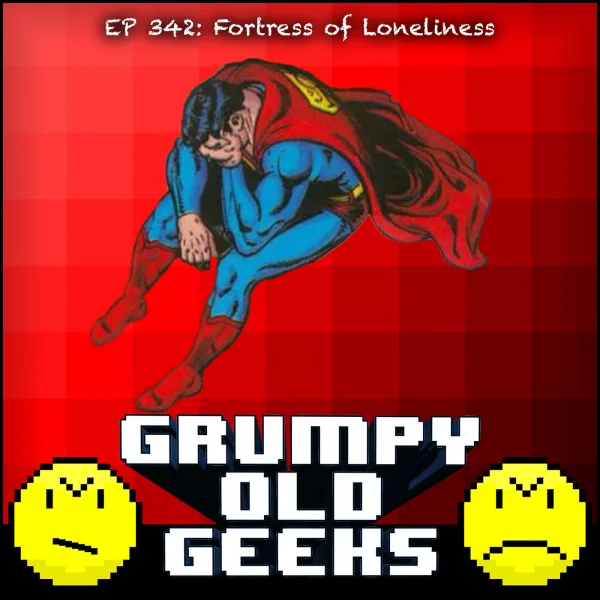
342: Fortress of Loneliness
View episode on the publisher’s site
The publisher’s audio length has changed since transcription. Ads may differ, so timestamps may be offset.
Summary
This episode discusses labor organizing in technology, Facebook’s privacy claims, and the ways digital services profile users. The hosts also cover Google’s planned history deletion, smart lock records, an iPad Air setup, sound machines, dark mode, and fungal networks.
- The hosts discuss unionization efforts at npm and Gimlet and react to The Age of Surveillance Capitalism.
- Facebook’s redesign prompts questions about groups, privacy, facial recognition, and recommendation systems.
- They consider research on technology, boredom, and loneliness.
- They discuss Facebook’s proposed payment system, Amazon’s blockchain service, and package delivery to cars.
- Dave Bittner reports that a raccoon and her babies left his home after a trapper applied eviction fluid.
- Google’s planned automatic deletion of location and activity histories raises questions about profiles and backups.
- Latch smart locks prompt discussion of landlords’ access to entry records.
- The hosts discuss an iPad Air setup, sound machines, eye strain from dark mode, and fungi that connect plants.
Key moments
-
Unions and surveillance capitalism
The hosts discuss organizing at npm and Gimlet and their reactions to Shoshana Zuboff’s book.
-
Facebook, privacy, and prediction
Facebook’s redesign leads to discussion of profiling, facial recognition, and group recommendations.
-
Payments, blockchain, and package delivery
The hosts discuss Facebook’s proposed payment system, Amazon’s managed blockchain service, and deliveries to cars.
-
Dave Bittner’s raccoon update
Dave Bittner describes how a raccoon and her babies left his home after a trapper applied eviction fluid.
-
Google deletion and smart lock records
The hosts question what Google’s planned history deletion means and discuss records available through Latch locks.
-
Anonymity, consent, and Facebook
They discuss surveillance in public, consent to searches, and Facebook’s privacy claims.
-
iPad Air and sound machines
The hosts describe an iPad Air setup and compare sound machines used at home and while traveling.
-
Dark mode and fungal networks
They discuss reading discomfort in dark mode and fungal networks that connect plants.
Full transcript
-
This episode is brought to you by Eero. Never think about Wi-Fi again. Get $100 off the Eero base unit and two beacons package and one year of Eero Plus. Visit Eero.com, that's E-E-R-O dot com slash G-O-G, and at checkout, enter coupon code G-O-G for $100 off.
-
This episode is also brought to you by Hover. Go to Hover.com slash G-O-G to get 10% off your first purchase. Grumpy Old Geeks, a weekly talk show hosted by Brian Schulmeister and Jason DeFilippo discussing the finer points of what went wrong on the internet and who's to blame.
-
Welcome to Grumpy Old Geeks. I'm Jason DeFilippo. And I'm Brian Schulmeister. I am nice and caffeinated today and fairly grumpy, so this should be a good one. All right. Fantastic. I'm going through my Canadian coffee still. Love that stuff. I am Cornelio.
-
We're both drinking Canadian coffee because every time I go to Toronto, I come back with three gigantic tins of Tim Hortons. Oh, I got to say, man, I want to go back there. So bad. It was such a good breakfast. I know. The breakfast sandwich is the best. It really was. Puts us Americans to shame.
-
The Egg McMuffin, I just can't even eat them again anymore. No good. So sad. So sad. Thanks for ruining, you know, my one favorite breakfast for me. Preech. Anytime, man. A little follow up. Game of Thrones cinematographer says the Battle of Winterfell looks so dark because I fucking said so.
-
That's why. And he has every right to do that because he is the cinematographer. Yeah. Oh, he says what the cinematography was trying to achieve was to present a disorienting reaction of what a real life battle is like. We tried to give the viewers and fans a cool episode to watch or not watch, as the case may be.
-
What I mean, what I really want in my fantasy show with tits and dragons is the realistic fog of war. You know, I tuned in just so I could feel the horde of undead breathing down on me in the dark because, you know, realism. I just think this is all overblown.
-
You did get scenes that were lit enough to see the horde of undead breathing down on you. You did get scenes that had were full on battle insanity that were bright enough to see. It just it was interspersed with, you know, the whole like all the war movies do it. Saving Private Ryan had entire sequences where all you saw were explosions.
-
You had no idea where you were at or anything like that. Shut up. Shut up, everybody. It's a goddamn TV show. I know. But I mean, get a life. These guys got I'm sure this poor guy got so much shit for this that he just had to come out and say, yeah, people.
-
He's channeling Pee Wee Herman. I meant to do that. I meant to do that. Yeah. Poor guy. I thought it was fine because I am an adult and I know how to set my TV properly. Yes, we do do that as well. So that means I have a bit more follow up as well. We've been talking a bit about unionization, particularly in the tech industry and software engineers at the prominent tech firm NPM Inc, which makes the ubiquitous NPM NPM JavaScript package repository, which I'm so thankful.
-
I don't know too much about anymore because I'm done. Oh, man. He did. Trust me. You don't want to know. Yeah. So anyways, according to the register, which is an English technology news site, three of the five people. People let go recently claim it was because they were trying to form a union or complaints have been filed against the company with the U.S.
-
National Labor Relations Board. Three at the beginning of April and the fourth was filed last week. The complaint cited some specific charges in legalese that basically are often associated with Section seven of America's National Labor Relations Act, which protects an employee's right to bargain. So what Wendy Mussel, a partner lawyer at Stewart and Mussel's, told the register was these charges say to me that there are either some concerted activity to protect workers' rights at a union drive was being considered or started.
-
So, yeah, companies are pushing back. They're saying no unions. Yeah. And it's illegal. It's unfortunately very hard to prove. Yeah. So these these firings. So we'll see how that goes. And I've got a little follow up on the Gimlet unionization effort. Apparently, they now have a union.
-
All right. The Gimlet union Twitter account is actually been really cool. I checked it out this morning just to double check. And they've been covering unions on other tech companies like pretty heavily, like BuzzFeed's trying to unionize and a couple other ones. And like any time there's a union unionization effort, they're covering it.
-
And it's pretty cool. I got to say. So good job. Good job. People are finally fighting back. And it's kind of a beautiful thing. I agree. Unfortunately, late. Too late for us. Too late for us and probably too late for everyone, because I've got a bit of follow up as well. I started reading The Age of Surveillance Capitalism by Shoshana Zuboff, the book that you tipped me off to last week.
-
I've gotten. OK, it's a 700 page book, right? I got about 30 pages into it. I was depressed. I was angry. I was sad. If it would have been a physical book and not a $700 iPad, I probably would have thrown it across the room a few times.
-
I highlighted absolutely everything. Then I realized, why am I highlighting things? Because I'm highlighting absolutely everything outside of the fact that it's everything that we've been saying, except she's doing it like, you know, in a studious, educated manner. And I'm with you. We are fucked. I'm only 30 pages into this book and we are so fucked.
-
We're going to be talking about that more once we get into the in the news. But I told you, I told you that book is just like, that's why I went back to go buy the Kindle version after listening to the audio book. I'm like, I need to be able to highlight this stuff. But you're right. It's almost every single paragraph that there's something to highlight.
-
Now, having said that, I do want to I just want to say for those of you that are listening that are, say, our age, that you're your Gen Xers. This book is I'm thinking this book is going to be our this age's version of do you remember Naomi Klein's no logo? No, I do not.
-
OK, that was that was the like Gen X singles grunge era. This book came out that was anti-capitalism and and how, you know, the capitalist thing is destroying us and how we all have to have our logos and we're being taken over by Nike and big corporations. This is the tech version of that.
-
And somehow we've all survived and we're still here. And I actually I talked to my mom this week because we're about about a year ago now is is when things kind of really hit the downward spiral with my dad. We didn't know it at the time because we were just struggling to try to keep him good and as well and figure out everything that we could possibly do for him.
-
But looking back on it now, the signs are obviously there that this was this was the downward spiral. And I've been talking to my mom a lot recently because we're kind of just dealing with the fact that it's actually been a whole year. And she said something to me because I was talking to her a little bit about this book and the things that you and I talk about on the show a little bit.
-
And and she said something to me that she's been saying to me my entire life because my mom is a very super kind of grounded person. And she just said, look, you're not you can't change any of this. You can talk about it and that's a good thing. But this is completely and utterly out of your control. And the only thing that you control about this is how you feel about it.
-
So if you're going to let it drive you crazy, that's no way to live. And she's right. So as angry as I got, I calmed down a little bit. She's one hell of a Buddhist. Your mom. Yeah, she she kind of is. My mom's a pretty incredible woman. So every time I talk to her, I end up kind of going, OK, she's like, life's not that bad.
-
But, you know. Yeah, we're going to get into that in a little bit once we get to the news, because I have I have some thoughts on that as well. OK, if you're only 30 pages in, wait till you get to the Google stuff. Oh, Jiminy Jeepers. In the news.
-
Well, we had the big F8 developer conference. Fate. Fate. Interesting that it spells out fate. I always thought it was like F8. But and we we're getting a new redesigned Facebook app. And Web site.
-
The new app was available as of this Tuesday to U.S. consumers and will come to the rest of the world in the first half of the year. The desktop version will roll out in the coming months. And as the Zuck points out, this is the biggest change to the Facebook app and Web site that has been made in the last five years. I have the new app.
-
OK, but you don't have the new Web site. Nobody has the new. Nobody has the new Web site yet. The OK rolled out for U.S. consumers. So so the redesigned app and Web site are putting a major focus on Facebook groups, which is the Zuck's effort to kind of connect us individually again, because, you know, it couldn't just roll back to the way it was originally, which did just that.
-
And he says Facebook groups are already being used by over 400 million people. And he believes that there is a community for everyone. There is also going to be a new groups tab. Recommendations for new groups will pop up in your ads all the time, even though you don't want them and didn't ask for them. You will get more content from groups directly in your news feed, even though you don't want them and ask for them.
-
They will start adding new features to groups, including chat functionality for gaming groups, the ability to post without your name and self-help groups and way to flag potentially harmful groups. They are very focused on safety here, says the Zuck. Oh, yeah. So we're also getting a redesigned user interface, which involves completely ditching the color blue, except for the fact that the logo on the new app is blue.
-
So I don't understand how they're getting rid of the color blue. I've got a new icon, which includes animations. There's going to be a feature to discover new friends, which we already have. So I guess they're just revamping it to be even creepier. There's additional features for Facebook's dating service, which is creepy.
-
Shipping services for Facebook Marketplace and a new events tab, which is scheduled to launch this summer. Now, one thing I would like to point out, and I haven't read too much about this. I see that you have and you're going to have a lot of comments about it in a second is everybody kind of went is just buying their line that face pushing to Facebook groups is better for us.
-
What I see is an easier way to categorize us and build big data about us through related groups that we join. You know, well, here's the thing about that. I do have a little bit to say about that. Statistics and big data. It just got super easier for them the more we use groups.
-
Well, that's the thing, because they're trying to basically I mean, there's a lot to to deconstruct here. And I'm just going to we're going to do this in a in a lightning round fashion. OK, privacy is the big thing. They say we're going end to end encryption on everything. So they can't see what you're saying to your friends.
-
They still can see who you're talking to. So you have that metadata right there. The thing about this is, is, yes, they will be able to see your groups. You'll still they'll be able to mine your posts in your groups. All of this privacy talk means absolutely nothing. Absolutely nothing.
-
Because all of the data that they're still going to get, they're still going to do the same thing. They are basically profiling you and they are going to sell things to you and give their data to the advertisers. And nothing is going to change. And again, as we know what as we understand and we've talked about on the show before, people can get a very accurate picture of you just by the people you interact with.
-
You don't even need to give them any data. And if you keep joining groups, they're going to be able to dial in on you even better than if you just told them what you liked. Yes. And I mean, they've already got your profile. You know, it's not this is nothing new. And they don't even have to get a lot of data from you anymore.
-
They can get it from your rewards cards. They can get it from your credit card purchase history. They can get it in so many different vectors that what you post to your news feed is trivial anymore. That is, you know, that is such a noisy signal. It doesn't matter to them anymore.
-
Yep. And, you know, that your profile is already built. And we're going to talk about that in a second because it's going to be fucking fascinating here. And the whole point of this is it's lip service to try and say we're going for privacy. We're going for privacy. And we're taking away, you know, the news feed is going to go bye bye.
-
That's fine. That's OK, because the news feed is what makes everybody sad anyway. But this focus on groups is it's like, yes, let's put you in a bucket with a bunch of other people in a bunch of other buckets. And then we can do data analysis on which buckets you'd like to stand in while you're peeing yourself because you're just cold and lonely because these aren't real actual relationships with anybody.
-
But yeah, the between groups and events, which are the two things that they're going to highlight now in the new app. It's like, OK, who am I talking to? What am I doing? Yep. Right there. Those signals alone are enough to profile you for just about everything, because it's just the way that, you know, network systems work.
-
It's like every node in the network says something about what other nodes it's connected to. And it's this is the same. It's the same stuff. It's actually the same stuff. So if you think that anything that came out of F8 is going to make your data more private, then you just don't understand how Facebook works.
-
No. So everything is this is all the same stuff, but with a shiny new interface. And yeah, yeah. And, you know, the new desktop apps for Messenger. No, I'm never going to use that, obviously. Well, we're coming up on the date soon when I can actually go check and see if they deleted my profile, which will be fun.
-
But yeah, like none of this stuff is going to actually make your life any more private. There's still you're still going to be, you know, just a cog in the in the data machine and go read the book if you want to know more about that. Right. There is one thing that I saw on Wired this week that I thought was interesting.
-
It's an article called Facebook is finding problems with artificial intelligence, too. Oh, really? Yeah. So there are people inside Facebook who are making a pretty serious concerted effort to get their, quote unquote, AI ducks in a row. And by the way, I just want to point out whenever someone uses the term, quote unquote, AI, if they just put it in quotes, we wouldn't have anything to bitch about.
-
I thought we gave up on this battle. I know. I was just I read. I thought about that this morning when I was writing this out. I'm like, oh, if they just put AI in quotes, it's all good. Or or they could just say machine learning, which is what it is. Yeah. Yeah. So in this article, it's interesting because what they're going for is a 90 percent accuracy rate with their facial recognition.
-
That's so good. Well, I'm sure so glad that the people there don't work for the FAA because if 10 percent of the planes fell out of the sky, who would fly? You know, but we're allowing that level of air into facial recognition that can and will be used in the future to profile people for criminal offenses.
-
So it is already. Yes. That's the thing. That's the problem is it is already. It's not ready for prime time. Yes. We're still in the learning and testing phases. I don't understand. I get in the beginning of like coding and pro in the beginning of technology and coding and programming back when we were putting out websites and blah, blah, blah.
-
We would throw things out there that weren't quite done yet because we needed to figure out how they would break and the ways that they would break. And also, I wait, wait, wait. Are you saying that we moved fast and broke things? We did sometimes, but we weren't dealing with important stuff.
-
We were dealing with the fucking movie releases. Exactly. Or the Stone Temple Pilots website. We weren't even collecting emails back then. Are you saying that our work on Barbie was not seminal and, you know, defined a generation? I think we were far better with our Hot Wheels website than we were with the Barbie one.
-
Oh, I was gone before Hot Wheels. We learned a few things from that travesty of the Barbie site. Yeah. But not enough. But that was my point. That was kind of okay. The problem is we've never moved away from that mindset. We are at the point now where these things matter.
-
And they matter a lot because they are being used in legal things, everything, financial things. You shouldn't be releasing things that are version 0.05. You need your version one that's been tested. That's what you put out into the wild.
-
Or version four. Version four, most likely. Yes. So it seems crazy to me that we're just kind of running with that mindset for things that really matter. Yeah. The web has grown up a lot since we started, you know? So that's kind of it.
-
But to quote Jim Jeffries, I think we can all do better than 90%. This is just for people talking to people on portal. Well, what about those times when those portal files are subpoenaed? I know you're saying end-to-end encryption all the way through, but I like to look at history.
-
I'm just saying, oh, we are Snapchat. We delete everything. Except we don't. Yeah. Anyway. So it's nice to see that there are some people inside of Facebook that care. And of course, you know, it's the people who are disenfranchised by the bias in AI who are stepping up and actually taking care of this.
-
It's a black woman inside of Facebook. She's like, I'm sitting there talking to my friend on portal, and there's a white dude next to me. It recognized him, but I was the one talking, and it didn't recognize me. And she's just like, okay, well, let's bump this up the ladder.
-
Must have had that Games of Thrones filter on, and it was just too dark. It was just too dark. I think we need to modify our saying from it should now be all of this has happened before poorly, and it will all happen again poorly. Poorly. Yeah. So I want to roll into this one here because this is one of the things that is going to kind of make most people's head explode.
-
Tristan Harris, he's a formal Google design ethicist. We've talked about him on the show before. He's an incredibly intelligent guy, and he's like, no, and thank God he said this, your phone isn't listening to you. No. What's happening now is that inside of Google and all these other companies, they have what they call a voodoo doll representation of you.
-
They have little versions of us sandboxed. And what they do on those is they use quote-unquote AI and machine learning to run different versions of yourself and decision matrices to figure out what you're going to do next.
-
And this is, I mean, this blew my mind. I mean, it really is kind of insane that they have these profiles built of you. And what they're doing is they're running these prediction algorithms on what you're going to do next. And as you do other things and they get more signals into the voodoo doll, they can see how their algorithms are learning.
-
And then they can tweak the algorithms. Basically, we're never going to have to download ourselves into our computer. Google will just own a future version of us that becomes sentient. You jumped the gun on me on that one. Oh, sorry. Yes, that's true. That's what I'm saying. I'm like, okay, well, we're going to be able to open our phone and it is going to tell us what we want to do today because it already knows what we're going to want to do today.
-
Right. And then if Google's drones can just show up with the breakfast that it knows I already want. So when I walk out of my bedroom and it hands me a hot plate of the exact thing that I was thinking of it while I was staying in bed. Tim Horton's breakfast sandwich. Yep. Just give me those supersonic drones from Canada and then you can go from there.
-
And I'm thinking to myself, how do you fight this? And do you then just start putting lots of noise into the stream and start searching for random things? Start like, you know, changing your behavior to throw the algorithms off.
-
But these algorithms are so smart. They're going to say, okay, well, what you just did was like 0.5% out of baseline. So we can ignore that signal and know that you're just fucking with us. And then if they knows you're fucking with them, then can it like label you as an enemy combatant to the algorithm and then start treating you differently from there?
-
There's so many ways that you can your brain will hurt. My brain hurt last night. I was up for three hours thinking about this exact thing. Look, to be honest, resistance is futile. It really is. I don't think that you can fight this because like you said, the algorithm will learn when you're messing with it because it gets all the data from other vector points that you can't really, unless you're stupid, you can't really screw up because you're not going to start buying real things in the real world just to mess with an algorithm.
-
Exactly. So they're going to be pulling in that data. They're going to see all the things that you buy, whether you buy it through Google or anywhere else, because they're licensing your data from other vectors. So there's no way to fight this. We're creatures of habit. People are too damn lazy to care.
-
They're too lazy to care. And as you get farther into the book, you'll learn more about how they manipulate the outrage cycle and the outrage machine to get things through that we originally go. Are you kidding me? We don't want that. Yeah, maybe. OK, fine.
-
It's normal now. You know, it all becomes normalized. It all becomes normalized. And I went through and kept reading about this. The story where he's talking about the voodoo dolls and it came back to a town hall at the Milken Institute. And I watched it last. It's an hour long talk with some extremely smart guys.
-
And one of the things that Tristan Tristan was talking about was. So this is the law of unintended consequences that we've talked about in the like, you know, was it two months ago now that we really started to harp on? It is kind of insane because he calls this the conspiracy correlation matrix.
-
Let's say a housewife signs up for Facebook. And she signs up for a group. Well, now the algorithm is saying we want engagement. So we look at the engagement for housewives and we think, OK, what groups would she be a good fit in that would promote engagement?
-
Well, wouldn't that possibly the anti-vaccination groups because she cares about her children and then she goes into the anti-vaxxer group and she's promoted to it. It's like, you know, given up.
-
And if she if she if she signs up for the anti-vaxxer group, well, then she goes down the conspiracy group wormhole and they call that he called it the conspiracy correlation matrix, because once you even dip your toe in the water, then you start to get all of these different conspiracy theory groups because that promotes engagement.
-
And once it once it once it is tuned for engagement and not for value, things can definitely go sideways. And that's what we've been seeing. Well, just no, you don't have to look any further than the journalist industry news.
-
Yeah, that's that's what's happened to news over the past 10 years. That's why it's crap now. That's why we're always shocked when there's good reporting. Yeah. Yeah. I mean, how many times have we said, wait, BuzzFeed does good news? What? And they're unionizing. Good for them. So this this there's a set of articles here that I recommend everybody go check out.
-
And especially if you've got the time, the nice thing about YouTube now, while they're profiling you and doing all this stuff, you can at least watch the videos at one point five X. So I watched the town hall meeting at one point five. But there were a couple other things that came out of there that was that was really interesting. One of the guys said, we need a Hippocratic oath for engineers.
-
Do no harm. Yep. You know, if we had something like that, maybe people would actually take it more seriously instead of saying, how can we make more money? How about don't fuck everybody up in the process? You know, because all of this stuff, it's all just so fine tuned to manipulate people for, wait for it, money.
-
Yep. And that's all it really is. And it goes back to shareholder value. They even bring up in the talk what we've been saying forever. You can't get rid of 60 million bots because the shareholders are going to like, you know, shit a brick. Yeah. All of a sudden you've lost 60 million users.
-
Yeah. And they also talk about artificial polarization, which is another engagement metric that makes people want to talk more. And there was another, another bit in there that I thought was just fascinating that I think you'll, you'll dig this one. It's like, okay, I'm a, I'm a dick.
-
I go on and I bully somebody. Normally in human interaction, if I'm standing in front of you and I say something shitty to you, I'm going to get an emotional reaction from you. Mm hmm. On the internet, what you get is a bunch of people that agree with your opinion, liking you, retweeting you, giving you pats on the back.
-
So your brain equates what the shitty thing that you just did is actually being good. Yeah. And that's how the cycle keeps repeating over and over again. Was that a hypothetical or did you really do that? I did not do that.
-
I was just, they talked about it in the thing, but it's, it's, it's a really interesting concept. And that's why I love, I love Tristan Harris. This guy is super smart. And it was funny because there were like, there was supposed to be a panel of five people in that video. And two people quit because they had a guy from Nantech on there, you know, the Pokemon go people.
-
And they were like, oh, we don't want to be on a panel with him because he's a, you know, he's from alphabet and he's part of the problem, not the solution. And the guy who was running the panel was just like, I'm not going to out them, but they were just on stage a few minutes ago. And, uh, he was like, that's not how you actually get smarter and get better and become better.
-
No, you have to engage in the discussions. Exactly. So, but all in all, it was really cool. And I've been going through these Milken Institute videos, highly recommended stuff. I really like digging into the more, the smarter side of things instead of just sitting here saying the F bomb a lot and yelling a lot.
-
But these guys are really so much more time. It does. But here's the point that you came to before. We can't change anything. Nope. So what do you do? Do you just give up and say, okay, well, here it is.
-
Here's my data. You're going to take it anyway and not worry about it. Or are there things that you can do to change it? And most people are going to say, fuck it. I don't care. I can't change it. So what am I going to do? But I think learning about it and being able to talk about it in a educated way is good for everybody.
-
So I'm just why I'm really going down the rabbit hole on this stuff now, because we've just been screaming at the sky. Nobody's been paying attention. That's fine. That's fine. But at least I want to be able to maybe just think about it on a deeper level. And this week or the past two weeks between that book and all the stuff that we've talked about and just the more things that keep coming out, it's just really, really getting deep into me that I really want to know as much as I possibly can.
-
And behind the science, too, of what they're doing to us and how to either defend against it or just see when it's happening and say, OK, well, you know what? That was actually a really good recommendation. I do need new shoelaces. Well, in keeping with that theme, I found a really great article over on what used to be Recode, but has now been bought by Vox.
-
So it's Vox Recode. I don't even know. What happened? Vox owns Recode now. So if you try to go to Recode, you go to Vox.com slash Recode, and they've done a redesign, of course. Oh, well, hey, you know what? Good for them for checking out. They probably got a good paycheck. Yeah, good for them, I guess. Yeah, you know, Walt needs his little CPAP machine and his oxygen tank to roll around.
-
So good for him. So here's another big, deep dive that I think you will enjoy. I actually didn't even get to finish this article because it's quite long, but it is a new book that I will be wanting to read after I finish this current one that's making me angry called Bored, Lonely, Angry, and Stupid. And this book is about most people assume social media is making us more narcissistic, more compulsive and lonelier.
-
But is it really true? And here's how they want it. Go ahead. You're dying to say something. I can hear it. I am. I mean, that's the title of my autobiography. They stole it. They stole my autobiography title. Damn it. What the authors wanted to find in this particular thing is, were we always this way or as social media and technology made us worse?
-
And they did this by examining diaries, letters, memoirs of a broad cross-section of Americans from the 19th and 20th centuries, trying to capture their inner lives as closely as possible. They then conducted interviews with modern-day Americans in order to understand how their emotions are being transformed by technological change. Absolutely fascinating stuff.
-
I'm dying to read this book. So there's just a bit, a couple bits in the article because I didn't get to finish it, but I think you did. So you have some other points. But the idea was to see how our views of boredom, loneliness, selfhood, and community have evolved over time and how technologies have sparked those evolutions. And what they found was striking.
-
We don't merely develop new devices for expressing our emotions. Our devices usually alter what emotions we express. Things like boredom didn't even exist until the 19th century. When people experienced empty moments, they described them as dull or monotonous or tedious. There was no boredom. Yeah, crazy.
-
People expected feelings of empty time and accepted them as part and parcel of being human. And the same is true for lonesomeness. Like, we just accepted it. It was part of being human, so we didn't even think about it as a massively negative thing. But, of course, now that we're living a 24-7, always-on, something's always at your fingertips, we're lonely.
-
One of the things that they talk about in the article, too, is it's like it wasn't loneliness before. It was called solitude. Yeah, and it was a good thing. So the language has changed. Yeah, the language has changed. So the thoughts about what things are have changed. I mean, it's a fantastic article. And I got, like, three-quarters of the way through it.
-
And I definitely am going to read this book. Me, too. My favorite quote in the article, though, is, Being still with yourself can give access to all sorts of ideas and musings that wouldn't otherwise occur. So perhaps in our quest to end boredom, our creativity is being stunted, and we're actually becoming more boring.
-
It's a complete negative feedback loop. You know who I feel the most bad for, given all this change? Superman. I know, I know. Because he used to hang out in a fortress of solitude, but now he's in a fortress of loneliness. Sitting there checking Snapchat. Oh, man.
-
So Facebook is building a cryptocurrency-based payment system. Oh, yay. Yep. So they want to create a stablecoin, which is a currency-backed cryptocurrency. And, of course, in my mind, I'm like, why don't we just use currency?
-
Or we just use currency. Already there, isn't it, guys? You know why Facebook is doing this, actually? I actually totally, honestly understand why they're doing this. But they're doing this because they've been trying to get people to give them real currency for 10 years now, and none of us will.
-
So they're hoping that this stablecoin, this new form of currency, will sucker people into giving them money. Yes. Yes. That's a lot of it, for sure. You know, you put in your 20 bucks into, you know, FaceCoin, and then over time, that $20 will get eroded down to nothing, obviously.
-
Because you buy things, but the transaction fees will, you know, take it away. And psychologically, you don't treat it like it's real money. Exactly. Exactly. The gamification of cash. Mm-hmm. And the interesting thing is they're in talks with payment networks like Visa, MasterCard, and processors like First Data.
-
And the thing about this, I'm just like, why are they in talks with these guys? Because the entire object of this is to eat Visa and MasterCard's lunch. It's like, okay, those guys take 2% to 3% per transaction. If Facebook can come in and say, oh, we only take 1.5%, and that's coming out of your FaceCoin, then it's almost like no real money has changed hands.
-
Right. So I see a giant pushback from Visa and MasterCard. They're like, we're not going to play with you. No. No, here's our own version of a stablecoin. Yeah, VisaCoin, MasterCoin, all that stuff. But those payment processors, definitely, if they're smart, they're going to look at the recent history of how Facebook has treated every single market that was its friend until it didn't need them anymore and pulled a rug out from under them.
-
I'm looking at you, every news magazine on the planet, every small business on the planet, every artist and musician on the planet. Exactly. Put your stuff on Facebook. Everybody will see it. Put it up here. Everybody will see it. Oh, you have to pay us now if you want anyone to see anything. And soon you'll be able to pay in FaceCoin.
-
And also, they were also talking about how if you click on ads, you might be able to, like, you know, get a sliver of FaceCoin. Make some money. Yeah. There has to be some law against that. It's like, okay, over here, Joe is paying me to show his ads.
-
Over here, I'm showing the ads to you, who is now going to get a kickback for clicking on the ads that Joe paid me for. I mean, I am not an economist, I mean, I am not an economist, I'm not a lawyer, but that to me sounds really fucking illegal. Well, I mean, it's basically what we were all doing with the dipping your beak into Amazon and doing the Amazon links, right?
-
And that got beat down quite a lot. Part of cryptocurrency is, of course, the blockchain. Of course. Amazon has released their managed blockchain into the general public now. So, you can now go set up a blockchain on AWS.
-
Is it like their typical web services in which that if you don't happen to click off on the button that says secure this blockchain, it'll be completely unsecured? I fucking hope so. I really do. Oh, man, because we're running out of S3 buckets to go around and just troll.
-
Let's just troll everybody's open blockchain. Oh, you forgot to click the secure blockchain button. They say that you're going to be able to use Ethereum or Hyperledger for these, but apparently Ethereum is not supported yet. You have to check back later for that one. But I'm like, okay, now, quick thought experiment here.
-
Isn't the whole point of a blockchain is that it's distributed and that multiple points of failure. So, if everybody's got a copy of it, node A can reconcile with node B and C and D to actually make a transaction happen, right? That is like the genius of the blockchain is that it's distributed across multiple systems.
-
So, let's take this beautiful distributed system and then put it on a single provider administered by a single owner, which is Amazon. Okay, Jason, doing a distributed ledger system, that's hard.
-
And if we want to say we're doing blockchain with our hamburger stand, because that's how we'll get people to invest in us, it's much easier just to open up an Amazon bucket of blockchain. It really is a bucket, a block bucket. So, I just thought that was ironic, is all I'm saying.
-
And in final Amazon news for me, I got a notice on my phone from my Ford app that I use to start my car in the morning to warm up the seats before I go out and have to go get my latte. That now, I can let people get into my car when I'm not even there to put my Amazon packages in it.
-
That's right. Amazon Key is now available for my new Explorer. They also key your car. Yeah, they key it right there. Yeah. So, I can, you know, instead of just letting the packages sit on the doorstep, now I can put them in my $50,000 car so somebody can come by and break my windows and steal my packages.
-
Yes. Great. That's progress. That's such progress. I love it. Yeah. Good times. My last bit of news, Tumblr. Remember Tumblr? Pornblur. Yes, Pornblur.
-
Tumblr's on the block since Verizon stepped on their own dicks and removed all the good stuff. Remember that? I did. Pornamageddon? Yep. Well, the monsters at Pornhub are considering buying the site, which is not a good thing. It's Pornhub's parent company, MindGeek.
-
Have you ever heard of MindGeek? I believe you've mentioned them a few times, yes. Yes, they are an exploitative shit fest. And they're single-handedly and in a very quixotic fashion ruining the entire industry that they make their bread and butter from. They can butter the bread on both sides, you know?
-
I think of them as Porntrist. Because it is all copyright infringement. Yes, it is. Yeah, they allow the wholesale copyright infringement of any and all adult movies that you can post for free. And when they're slapped with a takedown notice, you can post them back up in a few days.
-
You know, it's not like YouTube where they actually have filters and things like that and an entire billion-dollar system. They're just like, I posted again. Okay, we'll wait for another takedown notice, which most people can't even afford to do because it costs money to send the takedown notices. Right. So this company, MindGeek, they even bought a bunch of porn studios now.
-
So they're making the movies that are then getting pirated, posted to Pornhub and all their different websites, and then they don't have to pay royalties to the people who were in the movies. It's genius. It's evil genius. Evil genius. Yeah, but I mean, to their credit, they are at least keeping the sleaze in porn.
-
At an internet scale, they are internet scale sleazy, which is crazy. So I just want to say, every time you spank your monkey or slam your clam to anything on Pornhub or any of their gazillion sites, just a little bit of you should die inside. Because that milf you just creamed for all over your keyboard, she can't afford to buy pizza.
-
And I know those guys all love pizza porn. I'd like to thank Jason for illustrating why we don't talk about porn on this. I had some solitude this weekend, so I actually was able to be creative with my replies. Sure, that was loneliness.
-
Just always resonates. And hover.com slash GOG is the single best place to buy your domain name. If you've ever had to buy a domain from any other registrar, you know how difficult it can be. They've got terrible user interfaces and just a constant barrage of upsells make it almost impossible even just to find out where to buy a domain.
-
Hover has an incredibly clean and intuitive user interface without all the insane upsells. And they also have free Whois privacy on supported domains that you usually have to pay for at other sites just to keep your private details private. Not with Hover. And the more domains you own, the less you pay for renewals.
-
The savings start at just 10 domains and they go up from there. I currently have about 75, 80 domains with Hover, so I get a nice juicy discount every time one comes up for renewal. And every month, they have great sales on awesome top-level domains. Right now, you can get .club, .design, .online, .site, .space, .store, and .website for just $4.99 each.
-
And these prices do change often, so make sure you check their on-sale page when shopping for your domain so you can get the best deal for the best domain possible. And they've got over 400 domain name extensions to choose from, including all the classics and fun niche extensions. The days of having to spend a fortune on .com domains is completely over.
-
My main domains all have new extensions because it's just the new normal. It also lets you get something more aligned with who you are as a company, individual, or family. So get started today. Go to Hover.com slash GOG and get 10% off your first purchase. That's Hover.com slash GOG to get your awesome domain today and get 10% off your first purchase.
-
This episode is also sponsored by Eero. Eero is a home Wi-Fi system like nothing you've ever seen. The single router model just doesn't work for our increasingly high-bandwidth world, and it's simple physics, like light waves. Wi-Fi doesn't go through walls very well at all. Imagine asking a light bulb in your living room to light your master bedroom.
-
Yet so many people just get the crappy Wi-Fi from their ISP. What you need is a distributed system. This is what offices have had for years at considerable work and expense. I've got this set up in my house right now, and it is fantastic. I've got a bunch of Eero beacons and one base station that is well over 100 feet away from where I'm standing right now, and I get fantastic signal.
-
And current Wi-Fi routers are really tough to manage and optimize. The Eero app lets you manage your network from the palm of your hand, so you'll know how many devices are connected at any given point, as well as the internet speed that you're getting from your service provider. You can also easily create and share a guest network. And Eero is protected with state-of-the-art WPA2 encryption, and because it controls the hardware and the software for your entire network, it ensures that you're always secure.
-
Since traditional routers don't push software updates to their customers, they're left vulnerable to cyber attacks. Eero updates automatically, so you not only have the latest features, but the latest security at all times. And now they've got Eero Plus, which is designed to provide simple, reliable security that defends all your home's devices against threats like malware, spyware, phishing attacks, as well as unsuitable content.
-
The combination of Eero with Eero Plus provides complete protection for your network. And I get my automated report every week, and it's astounding how much Eero Plus blocks from even getting in the door to my computers. And with your Eero Plus subscription, you get a bunch of goodies, including VPN protection from Encrypt.me, password management from 1Password, and antivirus software from Malwarebytes.
-
So never think about Wi-Fi again. Get $100 off the Eero base unit and two beacons package in one year of Eero Plus. Visit Eero.com slash GOG and at checkout, enter code GOG. That's E-E-R-O dot com slash GOG and at checkout, enter code GOG for that $100 off.
-
And never worry about Wi-Fi again. Security? Ha! We're back this week with raccoon hunter Dave Bittner from the Cyber Wire podcast. The Cyber Wire is a free community-driven cybersecurity news service based in Maryland, home of many, many coons.
-
Dave is also the co-host of the Hacking Humans podcast, along with Joe Kerrigan, where they take on social engineering and taxidermy. That's right. Well, we're hoping to hear it's home of a few less raccoons now. Well, my home has fewer raccoons than it did a week ago. Excellent. Yeah.
-
Eviction fluid for the win. Now, do they clean up this eviction fluid once they're done or is that left for you to deal with? Well, they don't. So, Trapper Brad came over and he was the guy who, I don't know, spent some time up in my bedroom with my wife.
-
Because that is where there is a hatch to sort of get to the pipes for when we have a shower. Yeah, exactly. So, there's a hatch that gets to the pipes and that allows you to have access underneath the floor. So, that was, and the raccoons were right underneath of that spot in the crawl space in between the first and second floor.
-
So, they were able to drill a little hole and spritz some eviction fluid in there. And sure enough, a couple hours later, my wife was sitting in our family room and she heard, one at a time, Mama Raccoon dragging baby raccoons out of the house, across the ceiling with little baby raccoons chirping.
-
And she said, evidently, the last of the baby raccoons was not at all happy to be left alone while Mama was dragging everyone else out. Like, you know, are you coming back for me? What about me? Right, right. And so, Mama Raccoon came back and got rid of the last baby and we haven't heard from them since.
-
So, they put some tape around the opening of the hole where they were coming in and out of the house and they see if there's fur on that tape to see if they're coming, still coming and going. And once they're convinced that they're gone for good, then they close up the hole just to make sure that we don't end up with them trapped in the ceiling or anything.
-
Yeah, you don't want the raccoon version of Home Alone with the one baby left inside and then. Right, right, right, right. So, seems like we're out of the woods. Who knows? We'll see. The eviction fluid, I haven't smelled anything.
-
I haven't. Maybe it's just something that's stinky to raccoons. I don't know. Right. But I'm happy that there was no cutting of drywall. There were no holes in ceilings. There's nothing to be painted or patched or anything like that. Cost to a minimum.
-
Yeah. Yeah. I mean, I'm out several hundred dollars, but that's okay. That's the joys of homeownership, right? Oh, yes. Oh, yes. So, all's well that ends well so far. This is my first run-in with raccoons, and hopefully it is my last.
-
But, you know, Trapper Brad seems to have done the job and has left my wife with a smile on her face. I was going to say, if the raccoons come back, you know, check your wife's credit card statement, because she might be going down to Coons R Us and grabbing some fresh ones.
-
Right. Exactly. Right. Right. She's just got a little, she's got a little, what do you call, a little Bluetooth speaker that she's tucked up in the wall there, and she's playing raccoon sounds. Uh-oh. The raccoons are back. You might need to find some eviction fluid for Trapper Brad. Right.
-
Exactly. The raccoons are back. Guess I'm going to have to call Trapper Brad. Yeah. So, all right. There we go. All right. Well, let's go talk about Google. Google users will soon have the option to automatically delete their location and web browsing histories, a privacy enhancing feature to remove data about the places they've been to, the websites they visit, and the apps they use.
-
Now, you already have the option to turn off location history and web and app activity, as I'm sure all three of us have done. And you can also manually delete data that's generated from searches and other Google services. But this new feature will do it automagically on a regular schedule, offering a middle ground between Google permanently having the data and users having to delete it themselves.
-
Obviously, this is being rolled out in a means to attempt to convince the three of us and the other people like us to not choose to shut down all tracking. Because, hey, look, we're only going to keep it for a little while and then delete it. Mm-hmm. Now, here's the big question with this, and this is why they can let it go, because we talked about the voodoo dolling of our personas.
-
Now, they're going to get rid of the tracking data, so you can't see it anymore, and the web history data. But the profile that they build for you, is that still going to have, like, you know, oh, the places that you've driven by? Like, oh, he drives by El Pollo Loco every day, so we're going to give him some chicken ads.
-
Well, we get that go away. We get back to the question that we always ask on this segment. What does delete mean? Yes, that's what I'm asking. Do you guys think that the profile they're building around you, you know, is that going to be affected by deleting this data? Or do they abstract it enough into your voodoo doll persona to then make this useless, and that's why they can get rid of it now without any adverse effects?
-
I think it's probably that one. Yep. Okay. Me too. Yeah. Okay. Answers that question. Yeah. I have a couple questions about this. I guess it's they keep the data for three months, so it's a rolling three-month window on your data.
-
You can do three or 18. Those are the two options. Right, but let's say I opt for – I think if anybody's going to opt in, they're probably going to opt in for three, because why would you choose the 18 option? Well, because plenty of people are choosing not to turn it off at all, so I don't think they care.
-
Maybe the – yeah. So is it that every three months everything gets wiped out, or is it a rolling thing where things are only kept for three months, three months after any bit of data is generated? I'd imagine it's probably rolling. Yeah. It's a simple cron tab. Yeah.
-
There was an interesting thing in the last paragraph of one of the articles we linked to. The Google folks said, when you delete data, we follow a deletion policy to make sure your data is safely and completely removed from our servers or retained only in anonymized form. Oh.
-
Complete deletion of data from our servers generally takes around two months from the time of deletion, often includes up to a month-long recovery period in case the data was removed unintentionally. Google also uses encrypted backup storage to help recover from potential disasters, and data can remain on those systems for up to six months.
-
So it's not really deleted. Yeah. Yeah. Right? I mean, it's not deleted. No, there's a big old honking asterisk right there. Yeah. It's so ridiculous because it's not even an asterisk.
-
It's just – it's not deleted. Delete no longer has any meaning for these people. Yeah. Well, six months down the line, maybe. Maybe. If they are true to their word. If you're lucky. If I have opted in to delete in three months, that is my choice.
-
It is the choice I have opted into. I am not accidentally deleting any of that data, so you don't need to keep it in case you feel I accidentally deleted it because I've opted in to say I want it deleted. This is all lies. Okay. Anyways. Yep.
-
Yep. Well, and we'll get to – This shit just makes my brain hurt sometimes. Yeah. Like, language no longer has any meaning. Exactly. Well, we'll get to that in a couple minutes when we talk about Facebook. Ooh. Yeah. I want to talk about the Internet of Things for a second, and I found this one over on Medium, and it's America's favorite door-locking app has data privacy problems.
-
Well, Latch. Has anybody ever heard of Latch? I have not, but apparently it's America's favorite door-locking app. Yeah, exactly. Yeah. I think I've heard of it. Okay. Well, yeah. A lot of people are using it for their apartment buildings. Mm-hmm. And the problem is that their data privacy policies say that, oh, well, we can share your data with people who own the locks, which would be the landlords.
-
Right. And, you know, then they can do whatever they want to do with the data. I don't see it as a big deal because any decent apartment building is going to have video cameras so they can see when you come and go anyway. But people were up in arms about this. They're like, oh, my smart lock is watching where I go.
-
Well, it kind of needs to, to let you in the door. You know? Yeah. Do you guys see this any different? I'm trying to pull out the Tempest in the teapots when I see these things, and I think this might be one of them because it's like, okay, you can't opt out of it if you live in a building that uses these locks.
-
But what's the downside? Well, you can by living in a different building. Well, yeah, that's the only way to opt out is to find a new building unless you live in the building and then they install it after you've moved in. Mm-hmm. Right. And then, you know, then you have to go and sue them on Judge Judy and, you know, try and get some money back for relocation.
-
But for the most part, I don't really see this as a, as a real thing. Well, I was trying to puzzle through it myself, and my first thought was anyone who's lived in a rental unit knows that the folks who run the rental unit have a key to your apartment.
-
They have a key. Yes. They don't see any difference. So they can come and go. I suppose there are rules. They have to give you 24 hours notice before they can come into your place. Yes. Okay. The only thing that I, yeah. Okay, go ahead. Why don't we apply that same law to this? Same thing. Well, it's, it's not that they can come into your, into your apartment.
-
It's the fact that they have a record of what your comings and goings. Yeah. And I can see one use case for the building to track the comings and goings of the renter. And that's if you are illegally using your apartment as an Airbnb.
-
Yep. That's it. That was the only use case I could find. Yeah. To me, the difference here is kind of like the difference between having security cameras in a building and having security cameras with facial recognition. Yeah.
-
Right. We're taking it up a notch. That's true. Yeah. Yeah. So, and they say some of these locks have cameras built into them. So it can grab, when you go to unlock the lock, it can grab a little clip of video of you coming and going. Mm-hmm. Which is interesting. Especially if you're bringing your mistress home on the, the lunch hour and the landlord knows you're married.
-
And then, oh, here comes blackmail. Mm-hmm. Mm-hmm. Okay. Maybe two use cases. Let's keep going. Maybe we can get three or four. You got your kids coming and going, knowing if your kids are home alone, things like that. Or just even just being able to build out schedules of everybody in your household.
-
There's no reason for this stuff. I don't, I don't ever understand it. This always makes me think of those, you know, being up late at night, far too late at night. And the, the quality, shall we say, of commercials goes down a little bit. And you start to get the, the infomercials about, you know, making spaghetti is just too damn hard.
-
So you need to buy this device that makes making spaghetti less hard. I have one of those pots. Even in this article, they don't work and they're stupid. And it says, even in this article, who wants to fiddle with a metal key? It's not that hard, people. Yeah.
-
Oh, man. Yeah. I guess, I mean, the, what's the, what's in it for the landlords? Yeah. That was the other thing I was thinking as well as I have not, uh, I am no longer a renter and I haven't been a renter for quite some time. But in the days when I did rent, I did not really remember my landlords ever wanted, wanting to spend a dime if they could avoid it.
-
So I don't see landlords going out and buying these expensive systems. Yeah. And what if, and you know, what if you lose your phone? What if your phone gets jacked? How are you going to get home? You got your keys. They didn't steal your keys. They stole your phone. Because your keys aren't worth a tinker's cuss, but your phone is definitely worth a couple grand.
-
There are some good conveniences that have come from the internet of things, but I would never use anything that was the internet of things for something important, such as my main lock on my house. At least not yet, not with everything that we know about the lack of ethics and privacy and security on all these things and who has control of it and where the data is going.
-
We're just not there. I would never trust any of these things. I suppose it saves them the cost of having to re-key doors anytime someone moves in or out or worrying that someone took a key with them or made a copy of a key or anything like that. But that would assume then that the landlord is good at tech. Now he's got to get an IT person to redo these things every time.
-
And we've talked about this on the show. If you buy a car and you pair the app to the car and you sell the car. Yeah. What's the de-pairing mechanism here? Exactly. I mean, if people cannot decouple a car like a BMW, a $60,000 BMW from your app, you think they're going to go through the rigmarole of trying to do this with an apartment?
-
Mm-hmm. Yeah, and how do you prove it? Okay, say you decouple your phone. Like, say you have to go into your landlord and decouple your phone from the thing, and then you just leave, and then you reinstall a backup from your phone from a month and a half ago that still has you coupled. Well, I mean, generally, you'd think that the UDID for that would still be removed from the system.
-
But I don't see that. We think a lot of things about these. Oh, that's right, because we were good at programming. Oh, that's right. You see, we think about these things, Jason. Yeah. I have been in the situation with, like, a vacation rental where you'll get to the property and call the rental company, and they'll send out some code over the air that then unlocks the front door.
-
Okay. So that's a thing, and that seems to work pretty well, but that's different from an apartment building where I live. Yeah. Or maybe this is for slumlords who just want to be able to change the locks every time they rent out their illegal Airbnb. Maybe. Okay, use case three.
-
All right. Yeah. Well, this next story I put in here, this is from the New York Times opinion piece, Why You Can No Longer Get Lost in the Crowd. And it's really, it's an interesting look at this whole notion of obscurity, that you used to be able to get lost in a crowd.
-
There was a certain element of privacy that you could have by being in a crowd. But these days, with things like facial recognition technology, you're not guaranteed that sort of privacy from obscurity.
-
Yeah, it's kind of impossible anymore these days. It made me think, there's a radio show that I listen to here in LA called Frosty, Heidi, and Frank. And Frosty is a bit of a crazy older guy with, he's a little weird. He's a weird dude. And I remember he always says on the show, it's like a recurring thing, it's like, if everything goes horribly wrong in my life, if I screw up or whatever, I can always hobo on a train.
-
Meaning he could just pack up and disappear and go to another city. You can't do that anymore. No, you can't. You can't go somewhere and just start over anymore. That is gone. Yeah, that's interesting. That's interesting. License plate recognition. You can't even, you can't get out of your parking lot without everybody knowing where your car is.
-
Well, just your digital footprints everywhere. I mean, short of like going and changing your name, but even then, facial recognition, etc. Like, you literally cannot just disappear anymore unless you like go to another country and just completely like, you can't. You can't hobo on a train. Well, definitely don't go to China if you're trying to disappear because those guys know exactly where you're at every second.
-
They know if you're breeding age or not. Yeah, it's an interesting article. It sort of goes through how, you know, with space and time and even cognitive limitations for things that you used to be able to do to kind of mask yourself as you went about your day-to-day business, that these technologies have taken away.
-
And I think it's something worth thinking about it again, like I think we talked about either last week or the week before this about the panopticon and this notion that you don't, you don't get a break, you know, like I was thinking about what if, like, like, you just want to go for a walk, right?
-
You want to go for a walk in a park. Like there's a, near my house, there's a lake and I like to walk around the lake. There's a pathway that goes all around the lake. I like to go for a walk. Don't steal any turtles when you're at the lake. That's right. Careful of those turtles. Yeah, yeah. But the raccoons are open season. So I'm walking around the lake and, you know, you just see people and you nod to them and you say hello and they're strangers and so on.
-
And maybe every now and then you run into someone you know. But what happens when everyone's wearing the future version of Google Glass and as you're walking towards people, it's running your image through the facial recognition database and up pops, oh, there's Dave Bittner.
-
Who you are? He does the Cyber Wire podcast. He's, yeah, here are his children. Here's where he lives. Here's, you know, just, is that, is that where we are headed? I hope not. Oh, absolutely. It absolutely is now. That's why we're here screaming about this every week to our limited audiences saying, where are we going with this?
-
Well, certainly that's where we're headed right now. Dave, I highly recommend you read The Age of Surveillance Capitalism if you really want to know where we're going. Mm-hmm. Or what was that, that Black Mirror episode with What's-Her-Face, where they all had the social scores constantly? That was, that was stunning and that was terrifying.
-
Yeah. And it's happening. So, yeah. This is, this is a, it's one of those things where it's coming, get used to it. As Steve Rombaum used to say, privacy is dead, get over it. Yeah. Well, this next one is another one from the New York Times, also an opinion piece. This is their privacy project.
-
And this is some research. It's titled, Would You Let the Police Search Your Phone? We Are Much More Likely to Give Consent Than We Think. And interesting experiment that they did here. They wanted to see how willing people were to unlock their phones for them.
-
And they would get some folks to come into a lab. They were saying they were doing a psychology experiment and the people who came in, they would walk up to them and they'd say, before we begin the study, can you please unlock your phone and hand it to me? I just need to take your phone outside of the room for a moment and check for some things.
-
Now, what percentage of people do you suppose unlocked and handed over the phone? All of them. Sadly, a lot. 97%. Yep. Not in a million years would I do that. And I don't even have anything to hide.
-
Right. Now, here's the thing. They also had a control group where they described this interaction where they said, if I said to you, I need you to give me your phone, unlock it, and I'm going to take it out of the room for a while, only 14% of the people thought that was a reasonable thing to do.
-
So it's different if it's an abstract thought experiment versus I'm actually in front of somebody that I am treating as an authority figure. So I will do what the authority says to do. Right. Right. And the story goes on. It depends. I was going to say, is the person that's asking for your phone to unlock it, is he wearing a lab coat?
-
Because you go back to the old experiments on compliance. If somebody's wearing a lab coat, you can basically get somebody to shock somebody to death. You know? Right. Respect my authority. Yeah. It's the illusion of authority. That's what it is. Well, and they go on to describe some traffic data where people get pulled over by a police officer, and if police ask to search their car, nearly 90% of people say yes.
-
Yeah, because you don't really realize that you just assume, okay, they have the right to do that. It's a police officer. I think also you weigh the risk of saying, well, there's nothing bad in my car, and if I say no, that's just going to make my day even worse, because now I've got to sit here while the police goes and calls the dogs and blah, blah, blah, blah, blah.
-
But people, only 65% of people thought that people would say yes. So, in other words, the perception of how many people would say yes to the police officer is much lower than the actuality. And so, there's this, these are called, the legal term for this is a consent search, and it's a whole interesting bit of study here where this social interaction, this social component,
-
if someone comes to your door or knocks on your door, a police officer comes and says, hey, is it okay if we just come in and look around a little bit? Very few people will say, no, come back with a warrant. And it's a social hierarchy thing. Yep. Very interesting. As someone who's made that mistake in the past and let the police into his home and then was taken downtown to be fingerprinted for a rape charge that would happen to a neighbor, a rape and robbery, never, ever let a cop in your home.
-
That's why I have a doormat that says, come back with a warrant now. Because after I was taken down to the station and fingerprinted, I said, so what's this guy look like? He's like, oh, well, he's 5'6 and 270 pounds. At that point, I was six feet tall and weighed about 200 pounds.
-
Not anywhere near what they were looking for, but I let him into my house. They looked around and I worked in a business where I was, we were making movie posters and I had a lot of movie posters like Tomb Raider posters that never made it into production. So they came in, they thought I was a counterfeiter and they said, we're taking this guy with us and then maybe we can find something on him.
-
Fortunately, they didn't look on top of the microwave where I had a pirated copy of the new Harry Potter movie. Yeah, because that would have put you in jail for a long time. That would have been bad. But they literally looked in a box that I had that I'm just like, oh, shit, they shouldn't look in that box because I had a set of brass knuckle knives in there, which were a very bad thing to have.
-
But they wanted me for the movie posters. They're like, oh, you know what? We're going to once we're in his house, we're going to see what we can get because then we can get a gold star for the day. And even though I was. Yeah, it's just like, hey, we're here. Why not? Let's let's look around. Never let any cop into your house.
-
Never let him search your car. Don't take a breathalyzer. Ask for a lawyer. Never let them do anything. So I can see where people who have not been through that situation think that police are good. They're my friends. They're on our side. And how the like you said, the social hierarchy says, OK, my brain says he's a cop.
-
He's here for my benefit. And if I'm not doing anything wrong. Yeah, that's always the slippery slope, right? The I've done nothing wrong thing. Yeah. Well, they'll find something that you've done wrong. Read the book three felonies a day if you don't believe that they can find something on you.
-
You're just Mr. Librarian today, Jason, with the book recommendations. I'm telling you, man. I'm telling you. I am well read. You spent a lot of time in prison reading books. Right. Exactly. You had nothing else to do but mark the time reading books and becoming a prison lawyer. Waiting for the Innocence Project to get me out.
-
That's right. That's right. Then they took my DNA and sold it on the dark web. Mm hmm. Mm hmm. Well, to come back and come sort of full circle to what we were talking on earlier, this last story I have in here. This is from a website called The Outline.
-
And the story is written by Casey Johnston. It's Facebook is trying to make the word private meaningless. And this is in response to Mark Zuckerberg at Facebook's F8 conference last week, I suppose. He said, uh, the future is private and all of, and there was silence in the room.
-
You and us. Did you guys see the video of, uh, when he tried to make a joke about Facebook's privacy reputation and nobody laughed? Nobody laughed. That joke isn't funny anymore. Yeah. Yeah.
-
I figured they'd be smart. They'd be like, like, you ever notice at an Apple keynote, there's always like somebody in the front row whose job it is to whoop and hoop and, and say, woohoo, yeah. Like, like, you know, I don't know who it is, but it seems like it's the same person and Johnny, the cheerleader cheering.
-
Yeah, exactly. But, uh, I'm surprised Zuckerberg didn't have a, someone in the audience to laugh or cue a laugh track or something like that. Because he's not good at it. He's not good at it. No. An awkward moment, which he certainly has no shortage of, but, um, face, so Facebook is attempting to pivot to privacy.
-
And this article makes the point that it's not them being able to see the contents of what you're doing. It's the metadata that really matters. Yep. There's, like you said before. And that's the push towards groups is going to make it even worse. It's going to make it even worse in terms of data collection on us.
-
Yep. Yep. So with all the things that they can infer about us is still going to allow them to make all the money that they make. And, uh, Oh, and even more. Privacy is just an illusion. And they get to cloak themselves with, with the illusion of having given us more privacy.
-
Mm-hmm. Mm-hmm. Yeah. Yep. So. Fake news. We'll see. We'll see. Um, we'll see. Also, I think interesting because with both this and the Google story that we led off with, uh, there's a feeling that these are preemptive moves because they know the legislation is coming.
-
Right. That's inevitable. Yep. And so there's part of this of them saying, okay, listen, before you bring the hammer down on us with legislation, look what good citizens were being. Look at all the changes we're making to, to stop doing all those things that you're going to keep us from doing in the future.
-
We're doing it on our own. We don't need to be regulated. Exactly. We talked about this at the top of the show and it's like the signals that they've already got. It's like, okay, well, we've got this stuff. Does it really matter anymore that we're tracking this stuff? Well, no, not really because the profiles have already been built.
-
We've got all the core data already. These are things that we can give up to look like we're the good guys that don't actually mean anything to our data collection endeavors. And we can like look like really nice people by saying, Hey, we're not going to track this anymore. Whereas they just don't need it anymore because they know so much about you already that it just doesn't matter.
-
Yeah. I guess before we go, uh, just a quick little, uh, mention that, uh, I'm sad today because of Peter Mayhew passing away, uh, Chewbacca. Yes, it was sad news. We've, uh, we've lost a couple of main Star Wars people now.
-
Sad. Yeah. I think it's, I mean, thinking back about, uh, why he made Chewbacca special, um, you know, a man in a, in an ape suit, basically we all, we all loved and, and everybody wants to hug Chewbacca.
-
You know, everybody, if, if you see Chewbacca, you want to give Chewbacca a hug. And isn't that interesting that this space alien, this big furry space alien, somehow Peter Mayhew was able to put that personality into him. Yeah. No lines, uh, just made a, a lovable character that, uh, just, uh, I think a part of many of our lives.
-
So sad to see him go, uh, the character will live on, but, uh, another part of our childhood gone. So have a good week guys. Uh, wow. I feel bad about the future and the past now. That's right.
-
That's right. Brian live in the moment, live in the moment. I'm living in the moment. Deep breath. Yep. Ups and doodads. Well, I got my birthday present. I got an iPad air 10.5 inch wifi, 256 gigabytes space gray.
-
Woo. It's very nice. All right. It's fast. It's a good upgrade from my, I've been just using an iPad mini. So, uh, all that's getting kicked down and, uh, there you go. How old is that iPad mini? Like it's pretty old. Yeah. It's pretty old. So, but, uh, yeah, it's really fast.
-
It's great. I've been, uh, it's forced me to kind of, I've been cleaning up my digital life again, even more, um, whittling down apps, sorting everything out. Um, I've also got the Apple pencil first gen pencil, right? Not second gen. Yes. First gen pencil, because that's the only one that works with the iPad air. The second gen only works with the pros.
-
Um, it, it, it's interesting. It's nice. I don't understand why it's so big and so thick going back. Cause it runs forever. It runs forever. Right. I would prefer it to be somewhat smaller than it is, but I've actually found it to be quite useful. Um, it's, it's great for swiping and just general use.
-
So I've found myself using it quite a bit, uh, not ever for drawing or writing or anything just for navigation. It's pretty good for that. Check out good notes. If you need to take notes with it, because I've got great handwriting record or yeah, the handwriting recognition in good notes now is fantastic. So you can actually handwrite notes and then go back and search them later.
-
And it really works well. Excellent. And as per your recommendations, I got the ESR rebound slim smart case specifically designed for iPad air three 10.5 2019 flexible TPU back cover with a rubberized coating auto sleep wake and viewing typing stand for iPad air third gen 2019 black.
-
Great, simple case, very streamlined. Uh, like it a lot and I also, and cheap. And I also got the not cheap Logitech iPad pro 10.5 inch keyboard case slim covered with attachable backlit wireless keyboard and smart connector black. Yes. Which works with the iPad and I haven't used it much yet, but I think it's going to be very useful when I travel.
-
I can see myself not even getting my laptop out anymore. You don't need your laptop with this. This turns your iPad into a laptop. They're fantastic. So it's pretty cool so far. So, so far I'm pretty into it. I'm only a weekend, but, uh, it all seems really great. And I'm very happy with it. And yay. Happy birthday for me. Um, even though your birthday isn't for another two weeks.
-
No, it's not for another two weeks, but you know, whatever we're not, we're not, we're not big. We're not too big on exact dates in this household. Gotcha. We'll have dinner that night. Um, now I've had the adaptive sound technologies, electro fan, high fidelity, white noise sound machine with 20 unique non-looping fan, white noise sounds and sleep timer for our kid for a long time.
-
And we've had it in his room and it works great. What it is, is it's a bit clunky and big. It's great for the house. It's not good for traveling. So I found that they released a micro version, the electro fan micro wireless sleep sound machine and Bluetooth speaker with fan sounds, white noise and ocean sounds for sleep and sound masking.
-
This thing is tiny, it's sexy, it's cute. It fits like right on a nightstand. It's great for when we travel with a kid, but even better, my wife likes loud sounds. And when we upgraded to our Dyson, um, air purifier versus the gigantic machine that we had before, it was too quiet for her.
-
So she's using this right by on her bedside now, and it's not blowing my eardrums out. It's perfect for her to sleep. And, uh, she's going to take it with her on her trip. She's going to Nashville soon. So, uh, I've been doing all the tech stuff, getting her ready for that because once you're a tech person, you become the tech person for your whole family. So I, and this one's pretty cheap too.
-
So if you need a, like white noise or ocean sounds or anything like that, and don't want anything too clunky, I highly recommend this micro wireless sleep machine. It's great. Well, we need to get one for our trip to a fireside coming up in September, because that was the one thing we're like, right before we went to bed, we're like, we need some noise.
-
It's too damn quiet. All you can hear the bears sneaking up on you outside. And, uh, we ended up having to use it in the morning. Yeah. And the Goo Goo Dolls and Coldplay. Yep. You're welcome. You're very welcome. But we ended up having to use a fan, which when it's 40 degrees out, having a fan in the room was not the best idea.
-
So I expect one of the, one of us will have one of these in our bag when we head up to Canada again in September. Yes. And the one that I use is the Marpoc Dome classic white, white noise machine, 101 night trial and one year warranty. Soothing sounds from a real fan helps cancel noise while you sleep.
-
For adults and children. And I love this thing. I've had it for years. I just pulled it out because, uh, all of my, it's, it's getting warm here now in Southern California. So at night I use this in the, in the summer. I've had this for years, I love it because it is an actual fan.
-
So it does move the air in the room and you can change the pitch and all sorts of stuff with the little twisties on it. The thing that I found interesting was when I went to Amazon, the title was so long. It had a read more on the title. Now they, they actually started to add read more on the titles.
-
Yeah. They're battling back against the gamification a little bit, although they're not because, you know, they still let you do it for search results, but at least you don't have to read all the gobbledygook. Although it's become a part of our show. I like seeing all the gobbledygook. I do too. And the hard part was trying to copy and paste the damn title because the way they do the read more is like when I select the beginning of the title, the read more goes away.
-
So I was just like, I had to actually like look at it and type it while I, while I had hovered over it. The pain in the butt. Thanks Amazon for ruining one of our bits. Once again, we're back to the eggs, Jason. Are they good?
-
Are they bad? Oh no. I actually have a, I have a tip for eggs for you. Cause you were doing the protein thing in the morning. I switched my diet. I have six egg whites every morning from hard boiled eggs and I've been losing weight and I feel fantastic. The farts are terrible, but man.
-
So anyway, let's move on. What do you have? What do you have for us? Dark mode. We were all jazzed about dark mode. We wanted our apps to have dark mode. We wanted everything to have dark mode because we wanted to protect our eyes at night when we were using our, our iPads and our computers. So the main advantage then would be they don't shine so brightly in our eyes late at night.
-
However, according to Dr. Sam Pierce of the American optometric association, he lays out a case against dark mode. White text can also have a halo behind it when it's on a dark background. And in fact, white text on a black background can be too high contrast, contributing even further to the text being hard to read.
-
But regardless of the contrast, any dark mode is going to allow your pupils to dilate. That's exactly what our eyes do in dim light. And there's nothing wrong with that on its own, but it makes it harder to focus our eyes. Ask any photographer about depth of field. As a result, the muscles in our eyes have to work harder to smoosh the eyes lens into shape.
-
And in other words, you're more likely to get eye strain from dark mode. This is very funny that you bring this up because I have actually turned off dark mode on everything for this very reason. I was reading a ton of stuff for the show and reading it in dark mode. And I would also do, even if I was doing it during the day, I would look away and I would just see white lines in my periphery, like everywhere.
-
Like your eyes get focused on it. It's crazy. And then I noticed at night I would get like a terrible splitting headache in the middle of the night. And then I turned off dark mode and the headache went away. Right. So I just use like for the Kindle, I use sepia mode and just turn the brightness down now.
-
Right. Because the black background with white text, that shit hurts. So I'm with this guy. I'm with him. He says dark mode's bad and they also recommend to prevent any digital eye strain and headaches and sore eyes that can result from reading on screens of any color. This is just you look at something 20 feet away for 20 seconds every 20 minutes.
-
In other words, put your damn phone down. Yeah, that's so that's been around for ages. That's that's definitely a thing to do. You should always do that. Don't be staring at it for more than 20 minutes. Now, I've got one. And this one is just from the shits and giggles file.
-
A Scientology cruise ship and hundreds of passengers have been quarantined due to, wait for it, measles. Oh, Christ. Oh, Xenu. Yeah, or Xenu. Yes. The flagship of the fleet, the Freewinds, is stuck outside of St.
-
Lucia in the Caribbean right now because one of the crew members has the measles and they're like, nope, you ain't getting off that ship, brother, because it's a very small insulated island community. And they haven't had a real outbreak since like 1990. Right. Like, keep your shit to yourself.
-
Keep your bugs on your ship. I love it. What is wrong with people? I don't know if you heard because this is kind of hyper local news, but God, people are so stupid. An entire screening, a midnight screening of Avengers Endgame in Fullerton, which is a little bit south here of Los Angeles.
-
They were all exposed to measles because somebody went to the fucking movie with measles. Yeah, I saw that. I couldn't put that in, but this has Scientology. And I put a video in here of a tour of the Freewinds that they posted on YouTube, which is just well worth the watch.
-
All right, well, let's end with something interesting and a little bit fun. Plants talk to each other using an internet of fungus. Yes. There's an information superhighway that speeds up interactions between a large, diverse population of individuals. It allows individuals who may be widely separated to communicate and help each other out. It also allows them to commit new forms of crime.
-
We are not talking about the internet. We are talking about fungi, mushrooms. Yeah. Yeah. So we always just think about the big part of the mushroom, but most of their bodies are made up of massive thin threads known as mycelium. And we now know that these threads act as a kind of underground internet linking the roots of different plants.
-
The tree in your garden is probably hooked up to a bush several feet away, thanks to the mycelia. And it also explains the Star Trek Discovery drive. I was going to say, somebody on the Discovery writing staff read this article. That they will have to explain why it doesn't exist anymore in the Star Trek universe later on, but I digress.
-
So this is just fascinating. I mean, they're all there. They're linked together in a network that can help out neighbors by sharing nutrients and information or sabotage unwelcome plants by spreading toxic chemicals through the network. The Wood Wide Web, that's they went with, has its own version of cybercrime.
-
Pretty cool stuff. Should make you vegetarians a little less haughty. Yeah, seriously. Oh, I like to go mushroom hunting. Well, you're you're breaking the Wood Wide Web. Killing the Wood Wide Web, people. Big shout out to a friend of the show, Andy Stochansky, who also wrote our outro music.
-
He has a brand new single and a new project called White Elephant Orchestra. And the first single, Revolution Superstar, is out now on the tube of the U. So we have the link in the show notes. Check it out and give it a listen. And congrats, Andy. Full album coming soon. Excellent. Excellent. Love that guy. Nice guy.
-
Met him once at our meetup. He's very nice. And I got a shout out to Fireside, the conference up in Canada that we talked about a little bit earlier in the show. They finally put up their 2018 recap movie. Sadly, we're not in it, but it's a good recap.
-
And we're going to be talking about them a lot in the coming months because we're going back and we're going to be doing another show. All right. Hopefully that's going to be the plan. And we're in preliminary talks now. We might actually have some giveaways here on the show or maybe bring a fan with us to Fireside, which would be kind of cool.
-
How exciting. Just don't put them in our bunk. No, no. You're not sleeping with me, buddy. Sorry. You don't want to sleep with Jason with his current egg diet anyway. Oh, no. Until next time. Until next time. I'm Brian Schulmeister. And I'm Jason DeFillippo.
-
Thanks for listening to Grumpy Old Geeks. To support the show and keep us on the air, go to patreon.com slash GOG. Toss us a buck a month and we'll love you forever. If you'd like to give a one-time or recurring donation, go to GOG.show and click the PayPal button in the sidebar. Show notes for this episode are at GOG.show slash 342.
-
From there, you can find links to old episodes, leave feedback, ask questions, and get links to stuff we like. Stay grumpy.
-
At QVC, fall shopping is more than just checking out. It's discovering the brands you love across beauty, fashion, home, and culinary, all in one place. Whether you're getting ready for crisp mornings, cozy nights, or everyday moments, QVC has what you need for the season ahead.
-
With brands like Laura Geller, Philosophy, Ninja, and so many more. Shop now at QVC.com.