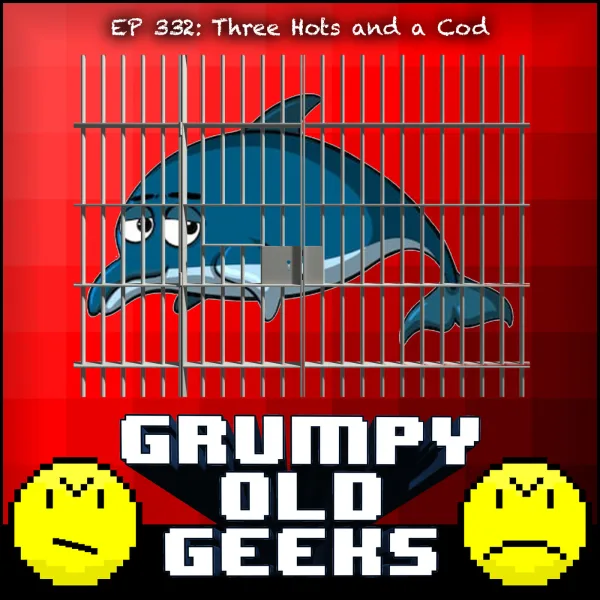
332: 3 Hots and a Cod
The publisher’s audio length has changed since transcription. Ads may differ, so timestamps may be offset.
Summary
This episode covers the hosts’ experiences with loss, friendship, social media, and memory, alongside news about platform policy, privacy, and security. Later segments turn to surveillance, a computer scan settlement, apps, podcast equipment, and stories from the early web.
- The hosts discuss bereavement, spending time with friends in person, and their social media use.
- They consider how photographing experiences and maintaining ongoing text conversations may affect memory and anxiety.
- They discuss Facebook’s ban on white nationalism and a federal housing discrimination charge concerning its advertising practices.
- The conversation covers the EU Copyright Directive, Lyft’s public offering, food delivery subsidies in China, and DNA sharing with law enforcement.
- Dave Bittner joins a discussion of dark web arrests, spyware in Google Play apps, payment card security, and Grindr’s sensitive user data.
- An article about hidden cameras in Airbnb rentals prompts a broader discussion of surveillance and privacy.
- The hosts describe a computer scan scheme and the $35 million settlement involving Office Depot and Support.com.
- They discuss Marco Polo, the RØDECaster Pro, early web friendships, wasabi farming, astrology apps, kale, and several closing stories.
Key moments
-
Personal news and digital detox
The hosts discuss bereavements, meeting friends in person, and their social media use.
-
Memory and constant contact
They consider research on photography and memory and the anxiety of unfinished text conversations.
-
Platforms, policy, and investment
The hosts discuss Facebook, the EU Copyright Directive, Lyft, delivery subsidies, DNA databases, and Twitter.
-
Security and sensitive data
Dave Bittner joins the hosts to discuss dark web arrests, spyware, payment cards, and Grindr.
-
Grindr and national security
The hosts discuss concerns about the sensitive user data held by Grindr under Chinese ownership.
-
Hidden cameras and surveillance
An article about cameras in Airbnb rentals leads to a wider discussion of surveillance and privacy.
-
Computer scan settlement
The hosts describe a computer scan scheme and the settlement involving Office Depot and Support.com.
-
Apps, equipment, and closing stories
The conversation turns to Marco Polo, podcast equipment, early web friendships, and several shorter stories.
Full transcript
-
This episode is brought to you by Eero. Never think about Wi-Fi again. Get $100 off the Eero base unit and two beacons package and one year of Eero Plus. Visit Eero.com slash GOG and at checkout enter GOG. Grumpy Old Geeks. A weekly talk show hosted by Brian Schulmeister and Jason DeFilippo discussing the finer points of what went wrong on the internet and who's to blame.
-
Welcome to Grumpy Old Geeks. I'm Jason DeFilippo. And I'm Brian Schulmeister. Okay, that was an interesting, sing-y, song-y hello. Good morning to you. I am attempting to force myself to be in a good mood and be positive. It's been a particularly rough year. It's been a particularly rough month and this week has been the cherry on the poop sandwich of this experience thus far.
-
But yeah, so as we were recording on Tuesday for the show that came out on Thursday, my phone started to blow up from people that I hadn't heard from in quite some time. Basically, my Finn McCool's family, like locals and people that work there currently and people that worked there in the past.
-
And we found out that one of the people that worked there in the past, it's funny because you were talking about the prefab Irish bars just on that show as well. And Finn's was never that. In fact, when they, well, it's kind of become that. But when they started, they actually really, everybody that worked there was Irish.
-
They were on work programs and brought over from Ireland. Oh, authentic. Yeah, it was very authentic. And there's this one guy, Brian, that was kind of there from the beginning. And he kind of, he basically, you know, mothered all these people as they came over, showed them the ropes about living here and working there. And unfortunately, he committed suicide.
-
Oh, man. That was very sad to hear. I hadn't seen or heard from him in quite a few years because he left and went back to the UK quite a while ago. But it was, it was bad news. And then yesterday, my friend and I started to get a bunch of calls from a different group of friends.
-
Our friend Jenny passed away from, she lost her fight against breast cancer. So it's been a hell of a week. And I don't think I've ever had competing memorials to attend in a weekend before. So that's one for the record books. Yeah, I'm sorry, man. That sucks. So thank you for doing the heavy lifting on this show. I've been kind of out of it a little bit, but let's get on with it, I guess.
-
All right. I had a quick note about my experience as I'm doing this kind of digital detox. Well, a bunch of people reached out to me this week, sadly, for not the best reasons. But I was reaching out to other people to kind of get meet space meetings and whatnot, rather than just emailing or texting. And I have to say, Canadians are much better at this, even if they happen to be supremely busy CEOs.
-
They make the time for you. I have a bunch of meetings scheduled with a bunch of Canadian friends. Americans, good fucking luck. Well, Americans in Los Angeles, which is notoriously bad for actually getting together and doing anything. Yeah. So that's been an interesting experience so far.
-
So if you are a friend of mine that haven't heard from me in quite some time and hopefully nobody that we know has passed away, you'll probably be hearing from me sometime soon. So pick up the damn phone. Okay. Oh, man. Yeah. A little follow up on my thing, too. I had to install Instagram back on my phone the other day.
-
What happened to Flume? Well, the way that Flume works with, like, replying to comments is a pain in the butt. Like, if you need to reply to somebody, it doesn't work that well. Right. And I've got all these people now that are trying to buy my username on Instagram because I've got a three-letter username.
-
Right. And they're all scams. It's worth something. Yeah. Well, yeah, everybody, they've got, like, 10 followers, and it's pictures of them at the gym. They're like, I give you $5,000. I'll PayPal it to you right now. And I'm like, yeah, right. I've gotten hundreds of these. Yeah. So I just had to go in, and I also had to change my bio, which is hard to do anywhere else.
-
Gotcha. So, yeah, if you want at JPD on Instagram, it's for sale, $10,000. Just basically got to send me some money through escrow.com, which means it's legit. So I've sold enough domain names to know how to do it safely. Right. But, you know, that's it.
-
I actually had somebody come out of the woodwork just, like, two weeks ago offering to buy one of the domains that I still own. And for, like, $20,000. And I was like, okay. And then I never heard back from them again. Yeah, that's how it goes. Yeah. That's how it goes. I think the last domain I sold was Vapid. No, it might have been one after that.
-
But Vapid.com I got rid of for $5,000. And now it's a CMS. I'm like, oh, guys, what are you thinking? It's a CMS in 2019. Yeah. Hmm. Oh, well. Now, speaking of more social media stuff, I found this over at Vice. It's called Social Media is Ruining Our Memories.
-
A long time ago, I used to talk about this quote on the show where it was like Miles Davis or somebody was at a club. And some woman stood up and took a picture with her little Kodak 110. And he stopped the show and looked at her and said, ma'am, by capturing the moment, you just missed it.
-
Now, I haven't been able to verify that quote, but my old professor used to throw it out in class. And when I asked him about it, he's like, yeah, I don't remember that. But see, nobody can remember anything anymore. But there are some studies out now that are showing how we're losing our memory because of our camera phones and posting to social media.
-
And it's really interesting because they used to call it the photo taking impairment effect. Right. And now they're talking about a new hypothesis called attentional disengagement. And well, that sounds like the name for our times, doesn't it? It really does.
-
It really does. And it talks about intentionality when you're taking a photograph. If you're if you're really intentional when you're taking it, it's going to cement itself in your memory like more vividly. But if you're just taking it and offloading the the moment to your camera for viewing it later, it's not really going to go from your short term to long term memory as well.
-
Or just posting it directly to an Instagram or a Facebook or whatever and not even, you know, storing it in your camera. Yeah. Yeah. If you're just doing a live Instagram story or Snapchat thing, it's like you just you might as well just not even do it because it doesn't matter. And you think about the, you know, the effects of that over time.
-
It's going to be you're going to have a bunch of old people, you know, in 30 years who just don't remember anything because they posted it to Instagram and Snapchat for disappearing stories. And I don't remember what I did in my 20s, period. Now, granted, I don't remember what I did in my 20s, but that was because we don't remember for completely different reasons.
-
Yeah. My lack of memory is chemical, not social. But it's an interesting set of articles they have in here and a bunch of the studies. So I'm going to go through all the studies. And I really I'm it's kind of fascinating, especially since I'm getting older. My memory is already going like like that.
-
And I used to have an amazing memory, but not anymore. Yeah, well, it's interesting because we have so many studies that are starting to come out about this stuff. Now we can start to get into the problem with the psychological studies and replication and all that, which we have talked about on the show before. But I found my I found another study.
-
So so this one is kind of getting into the fact that I like the title of this texting means never having to say goodbye. And that's kind of where it's gotten to now, right? Like we used to, you know, even as we did like AIM or Messenger or whatever, when we were, you know, stuck on on our desktops or our laptops.
-
Or whatever, we would end conversations. And I just did a quick look through on my text messaging screens. And these are all open conversations that have been going on for a long time. There's no goodbye. There's no see you later. There's no nothing. We don't do that anymore because we have something in our pocket at all times and we can always keep in touch with people.
-
So there's never really any later or I can't talk to you for a while or see you later. And there are studies about how, you know, this is really kind of messing us up a little bit. Everything is just one long rolling conversation. And there are studies about how, you know, this is the way our brains work.
-
And babies as young as a month get old upset if they're having a social interaction. And the other person suddenly goes silent and still faced, which is how our conversations go. Now, we don't have discrete ends to them anymore. It's all of a sudden somebody will just not respond for a while. And that messes with us.
-
It makes us feel bad about ourselves. It makes us wonder what's going on. It makes us anxious. So we're always kind of in this state of low-level anxiety if people aren't responding to us because we don't have conversational cues anymore. Yeah, you feel abandoned. Exactly.
-
It's crazy, right? It's like, what did I say? You know, what did I do? Oh, no. Yeah. So there's a media sociologist in Milan that has been studying how teens negotiate this perpetual contact our phones have created. And he is discovering that teens feel anxious almost all the time.
-
They would rather have somebody write back and, like, say something super negative to them than just not respond. So we're always anxious now because we can't even say goodbye anymore. That's interesting. That's interesting. I think it's a holdover for me, at least, from the old AIM days and things like that, where I actually do sign off when I need to.
-
I'm just like, okay, you know, if I'm talking to somebody on a thing, I'm like, hey, got to go. Going to bed. Going to do something. You know what? You're right. My conversations with you on Slack, we always tell each other, like, kind of, okay, talk to you later or got to go for a while or whatever. You and I are very good at that with each other. Yeah, it's just habit.
-
I'm like, okay, I don't want you sitting there waiting for me to respond to something. I'm going to go edit. I'm going to go to the store. I'm going to go walk the dogs. I'm going to do something else besides talk to you. You know, it just seems a polite thing to do. And it's just for me, it's just normal. Yeah. Well, a lot of people are not doing that anymore. Yeah, because I think they came up with this always connected, you know, just ubiquitous connectivity.
-
And they're just like, oh, well, I'll just pick it up later. And it's like, no, that's weird. I always found that weird, especially when people would just, you know, we're in the middle of a conversation and like they would stop writing. And I'm like, you okay? They're like, oh, yeah, yeah, yeah. I just had to go to a meeting. I'm like, well, thanks for telling me. Don't leave me hanging, bro.
-
Exactly. Dude. Oh. And last episode, we talked about the new Apple News Plus. Yes. Have you tried it yet? I have not. It was on my list to do this week before everything went to shit. Okay. Well, when you do do it, make a note in your calendar for like 29 days later.
-
Or you could do 28 days later if you like the movie, which I do. I really love that movie. Because if you stop your trial before it, you know, before it rolls over and you get charged for it, as soon as you stop the trial, you lose access to it. Wow. That's weird. Most people don't do that.
-
No, you basically get the trial until it runs out and then you don't get charged and things like that. But this came out of Reddit. Somebody's tried it and they're like, yeah, I was just going to cancel it and then keep using it for a month to see if I liked it. And if I did like it, then I would re-up, but I didn't want to get dinged for it. Do you think it was purposeful or sloppy programming?
-
I don't know. You can never tell with this thing. I honestly could not warrant a guest that would actually have any meat behind it whatsoever. Well, I mean, it's Apple and they're usually pretty good at these things. I can't help but think it's definitely an aberration for what they would normally do.
-
Yeah, it is. That's why I put it in here because I thought it was a little bit odd. Yeah. So if you want to check it out, definitely do that and just set a reminder. Because the thing about it is it's going to use your credit cards that are tied into Apple. Or your Apple credit card if you've got one already. Yeah. Well, nobody's got one of those.
-
We'll talk about that in a little bit. And, you know, if you set up a privacy.com card for your Apple stuff, it's still going to ding it unless you have it set to a limit on it or a time run or anything like that. Yeah. But most people aren't going to do that because that's a pain in the butt to do for just one bit of your Apple card.
-
You know, it'd be nice if I could just say, oh, I want to sign up for Apple News Plus and I want to use this credit card just for that. Can't do that. Nope. Just because of the way Apple's ecosystem is built, which makes it kind of a pain in the butt. And I don't even think I'm going to bother trying it. I mean, I've tried Apple News before and it's like, eh, there's really nothing in here that I don't get already.
-
I'm going to give it a go just because I've been wanting to kind of move to the way that you approach doing show notes for the show and your prep, which is iPad based. So I think if it's easy enough for me to get quotes and links and stories in and out of it and on to, you know, whatever the hell I'm going to use on my iPad to start putting the notes in, then I will be very happy.
-
And if it doesn't, then I will, you know, cancel my trial. Yeah, and the easiest way to do that, and this is for other people who do lots of research, if you're bouncing around the Internet all the time, I recommend getting a pinboard account and then installing. There are a couple of apps that you can get for pinboard for iOS, and there's also one that you can get for Android as well.
-
I've got on my Android phone and also on the desktop. So anytime I'm in an article, I just save it to my pinboard and tag it like, OK, this will be GOG 323. And then when I can go back to pinboard, take all of those links that I've done and then put them in our actual show notes that we use for, what the hell is it?
-
Oh, Quip. We use Quip for our show notes. Yes, we use Quip for our live show. Yeah, and, oh, by the way, did you know Quip was bought by Salesforce.com for $750 million? That's insane. That's ridiculous. For what this is? For what this is.
-
I mean, this is, that's ridiculously stupid money. Well, everything, we'll get to stupid money later in the show. OK, but yeah, I recommend if you're doing a lot of research, just get a pinboard account because it's simple. It's like, like the old days of delicious. It's cheap and it works. And that way you can store all your stuff in one place.
-
So you can do it from your phone, your desktop, your iPad, your Android phone, and then go back and take all your research and put it into whatever document system that you're going to use. If you're like writing a book, use Scrivener and things like that. So there's my, there's my tip. Having said all that, don't, don't start a podcast. In the news.
-
Facebook has banned white nationalism and white separatism. What? I think the funniest headline I found about this story was things you thought they already had done. Yeah. Shit that's still a thing. Like, oh, yeah.
-
Is this still a thing? I did not know that. Yeah, no, they've they're here's what they're just adding some more filters to their scrubbers. Yes, that's it. You know, another AI filter that we're going to find out in six months. They actually never turned on.
-
Yes. And didn't work when they did switch it on. Yeah. Fresh talent over there at Facebook. Fresh talent. Oh, so we'll see how this kind of pans out. But I'm more excited about the next Facebook story. Yes. The Department of Housing and Urban Development has charged Facebook with housing discrimination through ads.
-
So they allegedly encourage, enable and cause housing discrimination through its targeted advertising practices. They say they're violating the Fair Housing Act, which is federal legislation that prohibits discrimination against people seeking to buy or rent a home, getting a mortgage, seeking housing assistance or engaging in other housing related activities.
-
And they're basically saying that using a computer to limit a person's housing choices can be just as discriminatory as slamming a door in someone's face. Yep. So because you are able to put all these filters on your ads, they are saying that, you know, basically you're saying you're, you're, you're, you're breaking the law.
-
Yeah. You're breaking the law. You can't target ads to only specific people, particularly about housing. So yeah, there you go. Now I know that this is there because I used to run Facebook ads and I would see all the different options that are there. And I always wondered, how are they getting away with this?
-
I mean, it's great to target for by location for like, I was putting up ads for concerts that weren't selling particularly well. So of course I would target specific locations, but some of the stuff that they had in there, I was always like, who would, why would, what? And yeah, they're in trouble for it now.
-
Go figure. Yeah. And they're like, oh, we've been working with the HUD and now we're very surprised that, you know, they're actually filing this lawsuit against us because we're trying. We're really trying. No, you're not. We're trying real hard. No, you're not. Real hard. Yeah. No. So I love this one.
-
So every chance anybody gets, just slap this shit out of Facebook because. Well, it's definitely happening every week. We've got another one. Yeah. And this one is kind of sad. This is an article over at The Verge and it's entitled Europe is splitting the internet into three. And this comes on the heels of the EU Copyright Directive.
-
We've talked about this on the show before and it is passed. Yep. And I'd like to point out that America does not have a monopoly on stupid politicians. No, this is ridiculous. I can't, I don't even know how this is going to actually roll out in real life.
-
It's going to be really interesting to see. Well, the internet police are going to take over. Remember? That's right. The internet police. The internet police. When they're not dealing with GDPR, they're going to be going after these guys for putting in links to websites. Can't link to websites. Yeah.
-
And this, the new upload filter, you know, requirements. This whole thing is just, I like the, I like this. They say, but this latest effort is ham fisted in the extreme. It may have the effect of splintering the internet beyond what seemed possible even a few years ago. In the wake of GDPR's passage, Europeans couldn't visit the websites of some U.S. publishers for months as new privacy frameworks were put into place.
-
That sort of thing may be about to become a lot more common. The time has now come to speak of the internets, plural. And to get around, you might just need a passport. I think we might just have to go back to Gopher. I'm telling you, man. I'm telling you. I'm telling you. So this is, it's just ridiculous.
-
It's ridiculous. I understand copyright. I understand how you need to have, you know, more regulation in place. But you need to have regulation that is intelligent. And this is just stupid. Yeah. It's bad. It's bad news. So we'll be talking a lot more about it, I'm sure. Yeah.
-
Or maybe it'll get repealed. We'll see. But I remember the page that Google put up that said, this is what Google is, Google News is going to look like on this legislation. And there's nothing there. It's just like a blank page. Yep. Like, there's a great story, but we can't tell you about it.
-
And we can't really link to it. Can't put a picture up. God forbid that we actually do something that actually is good for the consumer. Like, give you the stuff that you searched for. Yeah. Stupid people. Yep. And speaking of stupid people, Lyft is going public and investors are excited.
-
So many are clamoring for Lyft stock that the bankers bringing the company public have raised its price. Ready for the shoe to drop? I'm waiting. I'm waiting. Where's that shoe? That doesn't mean investors think the company will be successful in the long run. Indeed, the hedge funds that are investing in Lyft aren't particularly thrilled about its long-term prospects.
-
Some 30% of hedge funds are bullish about Lyft, the ride-sharing underdog that's going public this week, according to a survey. But most of those are focused on how the stock will perform in the near term, not necessarily how well Lyft as a company will perform a few years from now. The primary reason for optimism were non-fundamental ones like scarcity value and investor demand.
-
In other words, they're first to hit the stock market, gotten the jump on Uber, and investors are excited about a shiny new tech stock. Pump and dump. Pump and dump. That's exactly what they're saying is going to happen. For shorter-term funds, they could be out by the name by the end of the day Friday. That is, they're in, and the first day Lyft is expected to trade on public markets, they're dumping it.
-
Okay, so everybody who listens to this show, unfortunately, by the time this show comes out, damn, it'll be too late. Yeah. Actually, no, no. This comes out Monday morning. So if you get this first thing Monday, and you're on your way to the office, and you're thinking, I'm going to get me some Lyft, don't. Just don't.
-
Save your money. Save your money. Because it's just, it's not going to end well. It's not going to end well. I mean, we called it with Snap. We kind of screwed up on Facebook, but, you know. Long-term, we're going to end up being right about Facebook. Long-term, we're going to be very right about Facebook. Now, I found this over at Bloomberg, and there's a couple reasons I wanted to talk about this one.
-
It's called The World's Greatest Delivery Empire. And it talks about how people in China can actually get their food delivered for much less than if they actually went to the stores. Okay. Yeah. How does that work? This is really interesting, because subsidies. Right.
-
Now, this is a company called, a delivery app called MyTwan. And I'm winging that one, because I went to howtopronounce.com, and all it was was text-to-speech with, like, seven different pronunciations. So I'm going with MyTwan. Okay. Now, so you can get a roast duck dish for $20 yuan, which is about $2.99.
-
About 80% less than it costs at the register. Wow. Can I get that here? Like, right now, it sounds good. I'm telling you, maybe Uber Eats is still on that level. No, they aren't. Yeah, too bad. Because what's happening is, this company is spending billions of dollars to, you know, get the customers.
-
Yeah, to win, to beat out everyone. That's what we've always said is going to happen. It's going to happen with these scooters, too. The prices are artificially low. It happened with Uber. The price was artificially low. And as soon as they killed off all the competition, boom, prices go up. That's how it works.
-
So, I'm just very happy. We talked last week about how, you know, Chinese programmers are burning out because they want to be part of the startup boom and the startup revolution and win the lottery. So, this company also wants to win the lottery. And all this has happened before.
-
All this will happen again. This is our, you know, this is our tagline from, I think, probably episode two. So, it's fun to watch it happen over and over again because people do not learn from the past. They do not learn from the past. And I wish Mark Zuckerberg would learn from the past because he should just go have a drink with Tom from MySpace and maybe he'll learn something.
-
But yeah, it's very interesting. It's a very long article, but it's got a lot of information on, you know, how they're actually doing the valuations behind it and where the money's coming from. But they're just, they're burning money. So, man, if I was living in Beijing right now, I would take advantage of this every day.
-
People are eating in three times a day because it's so much cheaper because Meituan is paying for their food. Love it. Yes, that's amazing. And as soon as Meituan starts to raise the price, guess what? Everybody will go back to the restaurants. Yes, exactly. That's the way it works. That's the way it works. Yep.
-
Well, we've talked a lot about the DNA testing companies and how their information is getting out there and being sold and given to governments and given to FBI and blah, blah, blah. And Family Tree DNA as a company has decided to take a particularly interesting approach to what's going on by making it a positive to share your DNA with law enforcement.
-
So they have a video featuring Ed Smart, the father of kidnapping victim Elizabeth Smart, which attempts to frame the sharing of its genetic database with the FBI as a positive. Look at all the good you're going to be doing for the world. We are going to catch criminals. Give us your datas. Oh, God.
-
It's an ingenious, really. It's ingenious to just spin it around and make it into a positive when it's actually a severe negative. This comes back and reminds me of America's Most Wanted. Remember John Walsh? His son was killed and then he went on the crusade. And then out of that, we got Stranger Danger.
-
And all of that, which has been proven completely false over the years and was just, you know, Stranger Danger didn't exist. It's, you know, kidnappings for children had gone down over the years, not up. And it was all of this hype and just fear mongering that made things worse.
-
And now we have helicopter parents. We have laws where you can't let your kid just go out and play by themselves like we used to do when we were kids. That shit just never existed. So I see this as another version of that. Yeah, it's basically using fear to get the data. It's kind of ridiculous.
-
Yeah. It's stomach churning. And DNA testing is not where it needs to be right now. Yes, they caught one guy. One guy. You want millions of data points to catch one guy who's like 70 and is going to die like, you know, in a week. Okay, great.
-
So you want all my data just because you want it. I know, no, no, no, no. Nobody, nobody check that checkbox. I know. Seriously. Just do not give up the rights to your DNA because somebody is trying to scare you into it and thinking that you're going to be safer because of it.
-
It's not going to fucking happen. And all it is is going to, you know, there's going to be false positives. We're going to have this. This is way too young to start shaking out like this. So do not do it. And, you know, fuck you, family tree DNA. I just it irks me that this is where it's come to this fast.
-
This fast. It's insane. Yeah. Yeah. No, this is way too quick. This this stuff needs to be worked out long in advance. Not good. Not good. I've seen Gattaca, too. Nope. Not a great movie, but still. But still. Now, Twitter is considering labeling Trump tweets that violate its rules or or or you could do what you do to normal people and fucking kick them off.
-
Yep. No, no, no. They're not going to do that. Get a special label. Unbelievable. Uh huh. Yeah. Because they, you know, they think it's, you know, in the public interest. It's in the public interest that you promote tweets by our commander in chief that are against your terms of service.
-
Because your terms of service are about protecting people from hate speech and inciting violence and things like that. So you're just going to say, yeah, we normally wouldn't do this if you did it. But you, you are a nobody. You sir, I'm going to pass. Yeah.
-
Let's let's let's give the orange in chief a pass because he's, you know, yeah, he's him. You, on the other hand, like me, got get banned for 24 hours or kicked off the platform. Yeah, this just this this angers me. This angers me greatly.
-
You are you are struggling with issues with Twitter in the same way because you are a Twitter power user that I am as a Facebook user. Yes, it's yeah. This is I mean, this is blatant hypocrisy. Oh, it's flat out straight up hypocrisy. However, having said that, I would love to provide them with suggestions for some of the flags that we can use for Donald Trump's tweets.
-
Oh, please bring it on. Bring it on. I don't have any offhand, but I mean, I think we just we just because, you know, it's going to be benign and ridiculous. It's going to be like there's going to be like a little fucking flame next to it or something. This one's racist. This is a threat. This is bullshit.
-
This is a lie. These are the tags we need. Yeah. Yeah. I just think, yeah, a little poop emoji next to it every time. This is this is presidential bullshit because we fact checked it and it does not appear to be true. It is not true. Oh, yeah.
-
Yeah, this one's racist. A little little hood, little KKK hood. A little KKK hood. Yeah. Perfect. Swastika next to them. Liar, liar, pants on fire. Oh, that's good. That's good. Yeah. This episode is sponsored by Eero.
-
Eero is a home Wi-Fi system like nothing you've seen. The single router model just doesn't work for our incredibly high bandwidth world. It's simple physics like light waves. Wi-Fi waves don't go through walls well. Imagine asking a light bulb in your living room to light your master bedroom.
-
Yet so many people just get the crappy Wi-Fi system from their ISP. What you need is a distributed system. This is what offices have had for years at considerable work and expense. Current Wi-Fi routers are really tough to manage and optimize. But the Eero app lets you manage your network from the palm of your hand so you'll know how many devices are connected at any given point as well as the internet speed that you're getting from your service provider.
-
And you can also easily create and share a guest network. This is so handy when you have a party. Oh, it's so easy. And Eero is protected with state-of-the-art WPA2 encryption. And because it controls the hardware and the software for your entire network, it ensures that you're always secure. Since traditional routers don't push software updates to their customers, they're left vulnerable to cyber attacks.
-
Eero updates automatically so that you not only have the latest features, but the latest security at all times. And I got to say, it is so nice not to worry about that. No updates. I'll just go in and I say, oh, last updated last night. Nice. Sweet. Thank you. And now they've got Eero Plus, which is designed to provide simple, reliable security that defends all your home's devices against threats like malware, spyware, phishing attacks, as well as unsuitable content.
-
And I get my automated report every week. And it's just incredible how many times Eero has blocked people trying to get into my network. It is so nice. And Eero Plus also has like network level ad blocking. So you can get rid of ads before they even get past the router. It really helps like load times for really ad-heavy sites.
-
And as we know, all sites are ad-heavy nowadays. And with your Eero Plus subscription, you get a bunch of goodies like VPN protection from encrypt.me, password management from 1Password, antivirus software from Malwarebytes. So never think about Wi-Fi again. Get $100 off the Eero base unit and two beacons package in one year of Eero Plus.
-
Visit Eero.com and at checkout, enter code GOG. That's E-E-R-O dot com slash GOG. Enter code GOG at checkout for that $100 off. Security? Ha! We're back this week with Dave Bittner from the Cyber Wire podcast.
-
The Cyber Wire is a free, community-driven cybersecurity news service based in Maryland. Dave is also co-host of the Hacking Humans podcast, along with Joe Kerrigan, where they take on social engineering and probably kvetch about the horribleness of their Baltimore Orioles. Yes, yes.
-
Opening day, yes. Not so good, eh? Well, isn't opening day supposed to be a day full of hope? Not here in Baltimore. I don't know. I can't say that I follow sports that closely, but I did hear that the Orioles lost. Two to seven to the New York Yankees.
-
And that's... And look at you with the sports ball. Yeah. Probably doesn't help that I think we are in a challenging division or what do they call it in baseball? The other group of teams that were teamed up...
-
Conference. The conference. There you go. Thank you very much. Yes. No problem. Yeah, we have teams like the Yankees and the Red Sox. So it makes us look even worse. Consider it a year for rebuilding. That's what I'm told, yes. I'm told we're bad and we're going to be bad for a while.
-
But hang in there. Brian, how did our L.A. Dodgers do yesterday? Oh, did you know that we broke a record for the most number of home runs in an opening season game or open series game ever? I do believe I did know that. Yes. Yes, it was quite a good game. Did you hit them or were they against you?
-
We hit them. Oh. We did quite well. So here's hoping. But don't worry. We've lost two World Series in a row. So we're going for three. The trifecta. Yeah. If we could only have that sort of bad luck around here. Dreams of going to the World Series.
-
Yeah. Yeah. Yeah. Yeah. Who knew we did a sports podcast? All right. Hey, this is Louie. First time caller. Long time listener. Listen. What's up with that puig guy? Yeah, they got to yank him from the outfield. All right. That's all I know.
-
So shall we actually do some security talk? Let us. I prefer baseball, actually. I'm in a better mood. Well, we're going to sit around here and start doing the voices. Let's just go with the global police arrest dozens of people on a dark web sting. Now we sound like we're in an old timey podcast. Right.
-
Exactly. You take that to your editor and tell him to print it. OK, moving on. So there was a big sting from around the globe. 61 people were arrested who are believed to have plied to their trade using 50 dark web accounts.
-
Oh, 61 people. But the thing about this is, is this is all dark web stuff. Right. Yeah. And all of these people are coming together now. Europol and basically just everybody. I mean, there's 17 countries involved in this. The dark web is not dark anymore.
-
That's all I really want to point out on this, because everybody seems to be getting busted nowadays. So I don't think Tor works the way you think it works. I think you're also dropping the best part of this entire story, which is the name of the operation dubbed Sabotor.
-
Yes, I was getting to that, but I'm sorry. Yes. Yeah. It's interesting. It's very interesting how many busts are coming out around the globe. So who has cracked Tor to find these things out? Or are they just like finding one cracked site, using it as a honeypot and then getting people's IP addresses that way and then backtracing them through Tor?
-
Where's the hole here that these people are getting, you know, sucked into where they can actually get arrested in in the meat space? Yeah, it is interesting. It doesn't really seem to be a dark web anymore. Like you said, it's kind of more. What's what's that term for the the the light at sunset?
-
It's more of a gloaming web. Gloaming. Yeah. Yeah. It's a gloaming web. The gloaming web. I like that. I like that. I want to suggest that. That's good. Yeah. Well, it seems as though the fear is the people who use these forums. Let me back up a little bit.
-
I think what we're probably seeing is the end or the winding down of these forums, these big name forums where people would be able to do this sort of business in the so-called dark web, which you're right, is not so dark.
-
So what the fear is, is that law enforcement takes over one of these sites and lets it run for a while so that that way they can collect all the information on the people who are using it, you know, get those people to slip up and not be using Tor or, you know, hey, meet me over here or, you know, find get the information they want to get.
-
And that's when the busts happen and the places shut down. And what I think with this one, there was sort of a synchronicity between one of the sites saying they were going to shut down and this bust. So there's like same day.
-
Yeah. So there's a lot of speculation that this site may have been pwned by law enforcement a while ago. Yeah. It was the dream market. Yeah. Bad dream market is more like it. Yeah. So we've seen this happen before, you know.
-
Oh, yeah. These cops go in and even with the Silk Road, we had feds that were in there as moderators who hadn't been turned around and stole a bunch of Bitcoin. But, you know, you can't really trust everybody. But, yeah, once once law enforcement gets in there and they can sink their sink their claws in, it's like game over, man.
-
Game over, man. Well, yes, I think partially it's game over, but partially it's just evolution. There's still going to be a market for everything that happens on these sites and business may be harder to do. Things might become more expensive, but they'll figure it out and they'll find a place to do this.
-
Well, that's the thing, right? Like as soon. Yeah. They're just going to go somewhere else. They're going to go back to meat space or just go back to meat space like we used to do, you know, like criminals should do. There's a back alley for a reason. Right. Right. Yeah.
-
You know, yeah, meet me behind a Waffle House and I'll bring your AK-47s in your smack. That's right. Well, you're followed. Yeah. Yeah. So it's just the more and more of these that come out just make me think that there's no real reason why anybody should be using the dark web for anything nefarious.
-
But I would also like to point out criminals generally are stupid. So people will try. That's true. Yeah. And there's a lot, especially if you're somewhere where it's not easy to make a living and by doing these sorts of things you can make a good living and you live in a place that doesn't really have the resources to pursue folks who are doing these sorts of things.
-
And, you know, the numbers might add up for you. Right. Yeah. And postal inspection has become pretty much state of the art where it's kind of hard to send, you know, a couple of kilos of cocaine through with a couple of stamps on it. Unlike the old days. Unlike the good old days. Or so you've heard.
-
So I've heard. So I've heard. Yeah. Yeah. Tough times. Tough times. Maybe we'll see a resurgence with BBSs. Oh. People can start going back to the old ways of dialing in on a modem to a. Fido net. Yeah. Yeah. Something like that. You know, bring back the old school tools because no, I guarantee you that the DEA is not trawling gopher looking for looking for bad guys.
-
That's a good point. The gopher web. Yes. Yeah. Hmm. You know, one at a time, dial up BBSs. Everybody's going to be going back to like flea markets and finding the old like Quadra 650s and putting them in their houses. And you're going to see a resurgence in landline orders.
-
Yeah. Screw that. I'm getting a TRS-80. Actually, I'm going up in the attic and I'm pulling down my TRS-80 and I'm going to. Finally, the excuse that I've been waiting for. No, honey, I'm making money. It's really here for a reason. Right.
-
Right. I got to find an old CRT TV to hose it up to and a cassette deck to load in my software. But away we go. Very slowly. Yes. Very, very slowly. Well, you know, you only got 16K of RAM. There's only so much space.
-
So some people are smooth criminals. We are slow criminals. That's right. That's right. So this next story I put in here, this is from Motherboard and it's about some apps that researchers have found on the Google Play Store. Imagine that.
-
That were actually government malware. Oops. Government. Which one? The Italian government, they think. Oh, really? Yeah. You don't hear much about that. No, you don't. Hey, be careful about what you say about my peoples.
-
Your peoples? I'm just saying, you guys have a lot of better things to do. You've got pizza and gelato, man. Who needs to hack? And Wario. Wario's. Yeah. Exactly. He's some Aspas. Yeah. So they discovered that these spyware apps were on the Play Store for two years, some of them.
-
Okay. And they thought that they were a focused sort of way to target people that the Italian government or whoever was behind this wanted to target. And to do it legally, because there are ways that if you have a warrant, there are circumstances by which it is legal to basically tap someone's phone, right?
-
Right. By installing some sort of spyware on it. But what they discovered was, the researchers discovered, that this malware that was being installed on these phones was very poorly written. And the check that it was supposed to do to look for the device's unique identifying number, the IMEI, which every phone has, it had a function called check valid target.
-
But the spyware didn't properly check the target. So it would basically install on any phone that it found. Anyone who installed this app would basically get owned by the software, even though it was supposedly targeting people.
-
Now, obviously, there are problems here, because if I'm using this to go after someone for whom I have a warrant, and it exposes everyone who downloaded and installed the software, we may be in a little bit of a legal pickle.
-
Right. You think? It's more of a legal salami. Yeah. Yeah. That's a legal ravioli. Come on. It's a legal cannoli. So they've been trying to figure out who is behind this.
-
All signs seem to point towards Italian government and some contractors who've been working with them. And people are questioning the legality of this, whether there could be some real trouble here. It seems like because they didn't program the software well.
-
Yeah. So it's an interesting case. Yeah. Too much wine. Too much wine. Too much wine. That's how it goes. Should have outsourced India like everybody else does. There you go. There you go. Yeah. I've got an interesting one here. I just want to get your take on this.
-
MasterCard and other banks might be ditching credit card numbers because of this whole Apple thing where they're talking about taking all the numbers off the card. Yep. And just because we have chips now. Yep. We don't need card numbers. Yeah. And I think that's a OK. Yeah. Because, you know, you look at it's going to completely screw over the market for stolen cards.
-
Well, yeah. Just, you know, just swiping cards at your restaurant or at your gas station and things like that. Yep. Because the chips are obviously encrypted, so you can just get the PIN, but without the chip, you can't really do much. But if you have the credit card number, the expiration date and the CVV off the back, well, you know, you can still run things.
-
So I think this is interesting, like an interesting move to get rid of basically credit card numbers altogether. Yeah. I'm down with it. I think it makes total sense. I think it's about time. And we've talked about how this is basically how Apple Pay has worked from the get go. It spins up a token that gets sent between your device and a single use one time token that gets sent between your device and Apple and the merchants so that it's not reusable.
-
It's a one time thing. And once it's burned, it's burned. I think this is long overdue. The U.S. lags in credit card safety. Yeah. And most of it's time. I mean, the whole notion that you go to a restaurant, you finish your meal, you hand your card to a stranger who then walks away with it and takes it into another room.
-
Yeah. This doesn't happen in Europe. They bring the little payment thing out to you. Doesn't happen in Canada either. They do that exact same thing. And gas stations are lagging way behind. And they all say, well, we don't want to pay for the new equipment.
-
Well, sorry. Yeah. That's why you find most of the skimmers is at gas stations nowadays. Exactly. Yep. Yeah. If I could, I would use Apple Pay for everything. It's just convenient. It's so convenient. It's fast. Yeah. And it's secure. So I'm all for this.
-
I think this will be a good. If, if, if Apple, if by doing this, Apple pushes the other card providers to move forward on this, I think that's a great thing. I agree. Well, very good. Very good. This next one I found just fairly amusing.
-
Grindr may be sold by its Chinese owner due to U.S. national security risk. Hmm. And I, I love this, that the fact that it is owned by a company called Kunlun Tech Company Limited. I've watched Iron Fist. I did not know that the Buddhist monks in Kunlun were the owners of Grindr.
-
Maybe that's why Kunlun was destroyed in season one. I don't know. But I think you're going to stretch here. I know. I'm trying, man. I'm trying. We're recording early this morning. The caffeine hasn't kicked in, but it makes sense that they don't want a foreign entity having this data because it's very sensitive data.
-
When you're talking about, talking about this stuff, you know, you're talking about GPS info. You're talking about HIV status. I did not know that was in Grindr, but I guess that would make sense. Yes. Oh, yes, it is. Okay. Spoken with authority, Jason. I have a friend that uses Grindr, and I was really surprised to find out that that was actually a flag that you set.
-
Wow. That, you know, that you are, you're positive or not. Right. Yeah. Makes sense. Because people who are positive hook up. Right. And people who are positive and not don't. Right. But actually, sometimes they do because they just want to get down. They can be careful. They want to get down with the sickness. But, yeah, it's a lot of data.
-
And you know that there are a lot of people in there that probably use their work email address. Right. You know, say NSA.gov. Dot mil. That shouldn't have. Dot mil. Yeah, dot mil. Yeah. Yeah. I mean, it's just like bad OPSEC for a lot of people, but people still do that.
-
Right. And I can see how this can be a massive, you know, opening for people to get basically blackmailed or, you know, turned. You know how these things go. Yeah. So to me, the fascinating thing about this is the direction that they're coming at it from, which is, listen, there is no way that we are ever going to get everybody off of Grindr.
-
Right. That the human sexual impulse is way too powerful. You know, we can't. So there's no way we're going to fix it from that direction. So give us our app back. Yeah. Right. You know, it's too risky to have a foreign country owning this.
-
So let's make a deal. Right. Yeah. Yeah. I just think that's fascinating. Yeah. Now, I found an article over at The Atlantic about Airbnb has a hidden camera problem is the title of the article. Shocking. Yes.
-
Yes, it is. The biggest problem here is that Airbnb is apparently doing fuck all about their hidden camera problem. They're just a platform, Jason. They're just a platform. Yes, they are. There's some very interesting stories in this article about people who have found cameras in their Airbnb places.
-
And not illegal. It's against the terms of service. Oh, it's against Airbnb's terms of service. It's against Airbnb's terms of service. OK. And in some cases, it is illegal. And the really, really screwed up part here is the story.
-
The main story focuses around one guy who got home, saw the cameras, took the cameras and took the house keys and left. And then, you know, tried to try to report it to Airbnb and, you know, get things done and report it to the police.
-
Well, turns out the police really aren't there to enforce Airbnb's terms of service. Right. But what this gentleman did was steal somebody's cameras and house keys. So, yeah, they look at it like you're a thief.
-
You just stole this man's cameras and his keys. Yeah. And also, the part that caught my eye was that they said to him, basically, you're a guest in someone else's house. And it's totally legal for someone to have cameras in their house.
-
It doesn't matter what room it is. It's up to them. It's their house. They can put cameras wherever they want. It's not a hotel. They don't have to disclose them to you. Right. It's, yeah. It's a home. It's not a hotel. When you think about it, if you're not a professional Airbnb-er, i.e. you didn't buy the property just to do that, it's your home.
-
You'd want, and you're having strangers. God knows why anybody would do this anyways, but people do do it. You're putting your home up and letting strangers come in. I'd want a camera. What if something got busted or stolen? I'd want a record of it. Yeah. There's another twist to this.
-
There's a couple other twists that I want to point out. One is the guy who had the cameras in the house that was renting out the room didn't actually own the house, and it was against the landlord's terms of service, so he was sneaking people in. Right. Like most Airbnb people do. Like most Airbnbs, yes. And I would like to throw this out.
-
If you've got cameras in the house, he could be live streaming that out, not just saving to a card, live streaming it to his computer, which then he sends out to all his pervy friends. Or just straight up on Facebook. Or just straight up on Facebook. Here's the real rub. What if your kids are with you?
-
Yep. What if this guy's got cameras in the house, and you've got your kids there? They come out of the shower, they get dressed, and he's got naked pictures of your kids. Does that change how you think about this? Not just consenting adults doing whatever they're doing in their Airbnb, but that is the loophole that, yeah, they're breaking Airbnb's terms of service, and all Airbnb can do is just kick them off the platform.
-
Yeah. I would imagine, though, I mean, don't you think at that point we've crossed some sort of legal line where now you're generating child pornography and it doesn't matter that it's inside your house? See, that's what I'm wondering. Are people following up on this? Yeah. Well, that's an interesting issue. I suppose it comes down to what you're doing with the recordings.
-
If you're just dumping them. Yeah. You know, nothing happened, delete, done. Yeah. You're probably okay. If you're keeping them, certainly if you're sharing them, that's definitely got to be. Well, if you're sharing them, yeah, that's illegal. Yeah. Straight out of the gate. I noticed that the Airbnb folks were very careful and very deliberate to refer to these cameras as security cameras all the time.
-
And I'm sorry, but the, I don't know, the camera built into the alarm clock in the bedroom. Pointing directly at the bed. At the bed. Yes. I might have a little discussion with you as to whether or not that's a security camera. Hidden in the smoke detector right above the bed.
-
Yeah. But I keep all my money underneath the bed. Right. It's under the mattress. I need a camera on it. Now, this reminded me of something, and I just wanted to bring this up to see how you guys feel about this.
-
This whole thing about cameras and hidden cameras, decades ago, back in 1981, when the National Aquarium in Baltimore first opened, brand new, beautiful facility, state of the art, an attraction for people came from all over the world to see this amazing aquarium.
-
It's still there. It's a beautiful aquarium. If you're in Baltimore, go see it. It's worth checking out. They had three dolphins living in the aquarium. They had a quarter million gallon tank. And pretty soon, the dolphins were getting sick. And one of the dolphins died.
-
This is about a year after the aquarium opened. So this is 1982. What they discovered was the dolphins all had ulcers because the dolphins weren't given the opportunity to have any privacy. There was no place for them to get out of the view of the humans.
-
Right. And so they basically got anxiety. They got ulcers. They got sick. And one of them actually died. So this just makes me wonder that more and more we are living in this world where there are cameras everywhere.
-
Yep. You leave your house. You're being recorded. Everywhere. And I think most people would agree that I think there's more anxiety these days than there used to be. And granted, there are a lot of reasons for that.
-
There's a lot of reasons for that. We covered a couple already on the show. Yeah. Well, and particularly in just the last two years. Yeah. But, and as we know, correlation is not causation, of course. But it's just something that I think about.
-
That this notion that in the back of our minds, all of us know that we could be being watched everywhere. What does that do to us in terms of the low-level baseline anxiety level?
-
Do you think there's anything to that line of thinking? Oh, hell yes. We've talked about the panopticon a number of times on this show. Yeah. So there's that. I think that we, I think we're, studies are going to come out about this, particularly in London. Because that was one of the first cities that basically established blanket camera surveillance.
-
Everybody knows anywhere in London at any point in time, they are being recorded. I think we're going to find out that it's really messing with people. I don't think it's a good thing at all. I, to some degree, I think we're being trained to almost forget about it and accept it.
-
But I think deep down in our human psyche, it's still getting to us. I have a little story about that. Yeah. When I moved into my new place back here in Woodland Hills, I brought all my security cameras with me. Because I always have them on, you know, 24-7 because I watch the pups. I'm like, where are the dogs?
-
And when I first moved in, my roommate was just like, yeah, I don't care. Put them wherever. And well, that lasted about a week. Then she started to get the low-level anxiety and it caused fights in the house. Because I'm like, what's wrong? What's wrong? She's like, I'm just sick of being watched all the time. I'm like, I'm not watching you.
-
You know, I'm checking on the dogs to see what's going on with them. She's like, but I feel like I'm being watched all the time. So we had to come up with a plan and a scheme where the cameras. It's not so much dead zones, but she has access to all the cameras as well.
-
I've got cameras on me now, so she can be watching me anytime in the studio. See, I think that's not the direction we should be going. But here's the thing. Maybe it is. Well, yeah, it solved the problem. That's the black mirror solution. It kind of is. That's what that is. Yeah, but we do have blackout zones where there are places where, you know, just the cameras aren't going.
-
It's just the common areas now where we know that things are fine. And you can also, like, she can look at the cameras on her iPad anytime she wants. I can look at the cameras on my iPad whenever I want. I'm watching you, but you can watch me. Whenever we're both at home, we turn off all the cameras.
-
That's it. So they're never on. But I can tell you that, you know, from somebody who was not used to having cameras in her house, it did create a ton of anxiety. Yeah, I think it would. And I don't know if your solution is really a solution because, you know, cameras can be switched on from anywhere.
-
I mean, it's working for you guys. I don't think it would work for me. I would know that this could be turned on by somebody with their laptop. No, no, no. They're physically turned off. There's an off switch. All right. So, you know, it's like, you know, you can you can do the soft off, but every camera in the house hasn't has an on and off switch on the bottom.
-
So we just turn them all off. And then at night we turn them back on. And then so we have security while we're sleeping. But of course, no cameras in the bedroom ever. No cameras in the bathroom. But we have all the exits covered and stuff like that. And some, you know, perpetual cameras on the outside of the house that don't matter.
-
So we can catch all the assholes that try and break in. But on the interior of the house, you just have to come up with a policy that is going to, you know, work for you. But it can cause anxiety. So I think that I'm with the dolphins. They need they need their privacy. Everybody needs privacy. But I think it's not even just the cameras that you know about.
-
It's the it's the fact that every USB charger, every little brick has the potential to be a camera because you can go on Amazon and buy. Why your Google Home might have or Google Nest might have a microphone in it without knowing. Yeah, right, right. Yeah. Well, it's not even just the stuff that we may not know about.
-
Think about the fact that every single person has a camera on them and, you know, they're shooting their viral videos, but they're getting you. Right. Or they're pretending to shoot a viral video and they're shooting a video of the girl in the bikini. I live right by the beach. I see this all the time. Yeah. You know, it's the old skirt problem.
-
Yeah. Yeah. Guys have cameras in their shoes. Everybody is carrying HD cameras around and video cameras in their pockets these days. And we don't think twice when we see somebody holding their phone out because we're all on our phones. They could just be on Facebook or they could be recording you. We are in this deep state, right?
-
I don't know if I'd call it deep state, but yeah, just deep creepy is more like deep creepy. But I even worry about audio recordings because I've got it. I've got an app on my phone called Just Press Record. I'm not even on my phone, on my watch. So anywhere I'm at, I can press a button on my watch and it will record everything around.
-
Yep. I mean, we have laws for these things, but it doesn't really help much. Not if you're into things like, you know, blackmail. So if you're following a target and you go to a restaurant with them and you want to record their private conversation, you get the booth next to them. You turn on your watch. You put your arm up on the back of the booth or the back of the chair like you're stretching and just keep it there and record everything they say.
-
There's so much. It's ubiquitous surveillance. All the stuff that was in the back of the comic books when we were kids and we never had enough money to send away for the. It's all in our pockets now and being done. Except the x-ray vision. We don't have that. Well, not yet, but we had getting close with some of these cameras.
-
We had a local one where there was a restaurant, just a, you know, a pub kind of place nearby here and the next town over. And there was an employee there who put a camera in the ladies room in one of the stalls. And, you know, it looked like a coat hanger, you know, thing you hook, you hang a coat on.
-
And, and he was, you know, recording women in the stalls. And I have several friends who went and ate at that restaurant during the time period when this, before this guy got busted. And that's just the feeling of violation you get.
-
And, and, and, and, and afterwards, you know, now you, you can't, you can't go to the bathroom without looking around and saying, what's in that vent up there? What's in that air freshener? What's in that, is that coat hook a camera? I don't have a solution to this.
-
I, I don't know how we, there is no solution. We're no, yeah, that's it. No, but it's a, it's an interesting place we find ourselves. Yeah. Interesting is one way to, way to phrase it. What a wonderful world we've created for ourselves. Yeah. You know, we all, we just increasingly have to rely on human decency.
-
And as we increasingly discovered, not, there is not a lot of it about. Oh, oh yeah. Human decency and ethics, something that we have definitely covered on this show that is in short supply. Yes. Well, speaking of people that don't have ethics, let's talk about Office Depot for a second.
-
Yeah. Let's wrap on this one. For years and years, Office Depot and Office Max were offering computer scans for their, their customers. And they were basically bilking them out of millions of dollars because they put up a fake.
-
Your computer has a virus screen on it. Right. I, they got fined for $35 million, $25 million, uh, that's yeah. $25 million will be paid by Office Depot and support.com will pay the other 10 million. And this seems like, okay, the money's going to be used to pay back the people that got bilked out of the money.
-
But this does not seem like very punitive to me. This just seems like, okay, we're going to give a refund. Well, this is a recurring theme in this segment on our show, which is, uh, no consequences. Really? Right. This company should be out of business. Yeah. Well, I mean, so should, uh, the geek squad, but you know, they're still around.
-
Yeah. So what do you guys think? Yeah. I suppose there's a certain amount of reputational damage that they'll get that get from this, depending on the amount of publicity it gets. But did you, I was looking around, I didn't see any, uh, numbers on any estimates for how much they'd made off of this scam.
-
It was up to 300 bucks each for the, the users, but I don't think they said how many people are part of the, the suit that are going to get their money back. Right. Was it a systematic thing or was it rogue employees? This was systematic between office depot and support.com.
-
Wow. Okay. That's, that's bad. Yeah. There was, there was basically what happened was it would ask you several questions when you, if you brought your computer in any computer that was brought in for this sort of free test. Uh, the first thing they would do is ask you any questions.
-
And the questions said things like, is your computer sluggish? Have you noticed any unusual activity? And chances are, if you brought your computer in, the answer to any of those questions would be yes. And so if you answered yes to any of those questions, even before anything was scanned, they would determine that your computer needed this $300 service.
-
That was the scam. Yep. Mm-hmm. All right. Yeah. Should be out of business, but they won't be. Kind of reminds me of the, uh, Scientologists out on the street asking, would you like your, your free test? You know? That's true. Yeah. That's right. Uh, that probably ends up being a little more expensive.
-
Let me, let me tell you about my Lord and Savior, Xenu. Yeah. Yeah. Yeah. Yeah. It's, uh, it's a shame. I, I don't know. I did see someone in one of the stories pointed out that this was brought by the FTC, which has the authority to find them and it would have to be someone else who would bring any sort of criminal charges against them.
-
But I, I, I, well, you know, who are we kidding? Yeah. It's not going to happen. Yeah. Yeah. It's a wild, wild west. Welcome to Deadwood. Yeah. Well, I mean, I, I, it seems like they certainly deserve whatever reputational damage they get from this and then some.
-
Yeah. Well, just start shopping at Staples. Mm-hmm. Mm-hmm. Oh, that's all I got this week. Yeah. Yeah. It's a lot. All right. Well, go out there and be nice to dolphins. They deserve it. They're under a lot of stress. Give them a little privacy. Give them a little privacy. Yeah.
-
I guess the dolphins near your house, uh, Brian, out, out there in the ocean, they've got it made. Well, I don't know. There's so many viral videos being shot here and then there's, you know, bird scooters being dumped onto their heads. That's actually an interesting question. Is a dolphin out in the ocean better off than a dolphin like at SeaWorld where you get three square meals a day and clean filtered water and three hots and a cod.
-
Yeah. I guess the dolphin in the ocean is still, still better off. At least they have their freedom. I think so. They've got freedom. All right, guys. I'll talk to you next week. Apps and doodads. And something else. Uh, I've got a brand new app, not brand new.
-
It's been around for a while, but I've got an app that I am now using that I'd heard other people use, uh, some, and I just never kind of was interested in it that much. Cause it's a video and who cares about video. So it's called Marco Polo and it's basically a real time video messaging instead of texting.
-
And, uh, a couple friends of mine were using it and kind of cajoled me into getting on it because they had heard me talking about, uh, my digital detox and how I was trying to move towards more, you know, in-person real conversations. And then there's the reality that, you know, some of my friends live in New York and some of my friends live in London and some of my friends don't live here in Los Angeles.
-
And there is no way to get together with them. Um, and some of them are groups of friends. Like I have a really good friend here, Suzanne, and I have a really good friend in New York, Nicole, and they're really good friends with each other. And I'm really good friends with both of them. And they were using Marco Polo and they're using it with a bunch of people. So they started me on a group conversation with them and it's phenomenal.
-
It's so much more personal than texting because it is, you're, you're seeing them, you're getting the conversational cues, you're getting everything. We say goodbye at the end of our messages, call back to the earlier in the show. Um, and I'm actually really enjoying it. I think this is a phenomenal way and it's super easy.
-
You know, it's much easier than Skype or anything like that. And you can have group conversations and there's all the stupid doodads that, you know, the kids like suit, bad gaws and stickers. Words and all that sort of stuff. We don't use any of that because we're adults. We just use it to talk and it's really great.
-
It's, it's just, again, it's an ongoing rolling conversation with discrete stops and conversational cues and it's just like hanging out together. It's, it's a lot of fun. So I, I highly recommend it to you, Jason, because I know you have friends all over the place as well and are trying to be more personal and interactive with people.
-
And I think this is a great, simple app to do it. Once you can get people on it, the trick is getting people on it. Friend of the show, Greg Bell, we've been trying to get you on this for months now to join our conversations. Download the damn app. Uh, public shaming, the way to go. That's right. I'll check it out. The thing that got me about it, which really was annoying, you put the, you put the link here in our notes.
-
So I went to the website for it. Yeah. It says absolutely nothing about what it does. Nothing at all. Well, you know, I, I'd never even looked at their website. Yeah. There's not a video telling you what it is. It's just like, you've been invited to Marco Polo, get the app. And I'm like, I wasn't invited. I just went to your website.
-
So, oh yeah. I'm actually looking at the website right now. Yeah. They do. Okay. Marco Polo people. You get to do a little work here. That's it. Like I see everybody that works for your company, but you say nothing about what this app is, man. I just did a better sales job on your app than you do. Oh, completely. Now I know what it does.
-
I went and I read the, our story thing where it talks about, Oh, we just wanted to be in touch with our family and blah, blah, blah, blah, blah. And the only way that I could kind of figure out what it did is I went to the support page and was looking at their fact use and I'm like, okay, I kind of get it.
-
And I'm like, it's, it's just video messaging. That's all it is. And it's, but it does it well and it's smart and it's simple to use. And, uh, it really, I definitely, cause I was texting with all with these groups of people all the time and this is so much more personal and it makes you, it forces you to invest the time as well because I can't just sit around and dash something off and I can't be with my kid and texting them.
-
I have to be able to sit down and shoot a video and talk, you know? So it makes you invest the time more to think about what you want to communicate and to have a more real conversation rather than just, yep. Okay. Right. Thanks. Good. Bye. See ya. Yeah, cool. Well, I'm glad it's working for you. I don't think any of my friends will get on it, but, uh, again, that is the trick.
-
Like I, for me, it was easy because I was invited by an already active group of my friends that are using it. So for me, it was a very simple process to get into it and use it with them. So, right, right. Yeah. I mean, this is the problem that you always yell at me about when I talk about starting up new social networks. It's like, nobody's going to come.
-
Nobody's going to come. Exactly. Exactly. Uh, well, my doodad for the week is the roadcaster pro. This is the, uh, they call it, they say it's the world's first fully integrated podcast production studio, whether you were just starting out or are a seasoned broadcast professional, the roadcaster pro podcast production studios, all you will ever need.
-
Well, I don't know about that. See, I'm very interested to hear this, uh, this now, because I am curious as to whether or not one of these will be sitting in front of me in a couple of weeks or not. So let me know. Uh, yeah, I'm definitely going to be doing the testing with it. Okay. Now, the reason I put this in here because I haven't actually tested it yet, but this comes back to you always bitching about nothing comes with a manual, right?
-
So I opened the box up and on top of it are three pieces of very thin cardboard. The first one, and these are, this is like one to one real size. There is a picture of the, the road pod pro caster. They show you how to plug it in. I flip it over.
-
I look at the back and in eight languages, there's one paragraph for, you know, it's like, this is the quick start guide. Okay. Update your firmware. Then I get to the other piece of cardboard. There's two other pieces of info on it. Then I get to the next piece of cardboard and there's two other pair, there's six paragraphs total.
-
But if you look at the square footage of cardboard and the half in the weight of the cardboard, I'm trying to do the mental math on this because the road pro caster, whatever the fuck it's called. I keep getting it backwards. This thing is made in Australia. So this has been shipped from Australia.
-
Right. And these things are heavy. I'm like, they could have probably cut the price down by like 50 bucks if they just wouldn't put this cardboard in there and put a, like, you know, a sheet of paper. It's crazy. So I'm going to be testing it out and there'll be videos on my Instagram, instagram.com slash JPD for the time being until I sell it.
-
So give me the monies, people, give me the monies and I'll get a new name, but it looks like it might actually work because when this thing first came out, you could not do multi-track recording. It's got four XLR inputs on it. So you can plug in four mics, but you could not get individual tracks on. I'm like, how can you call yourself a professional podcasting solution?
-
If you only going to give me a merged track, that is so stupid. And it also has these eight buttons for sound effects, but you can't select different banks. You only get eight. That's it. And I'm looking at our show right now. You're one, two, three, four, five, six, seven, eight, nine, 10 sound effects that we use in this show.
-
Yep. So that makes it useless and you can't just switch banks on the fly. So it is, you know, it's a work in progress. It is definitely a work in progress, but I just want to see how it sounds. I am already sensing. I will not have one of these on my desk. It depends on how it sounds. That's honestly, I bought this thing because I've got some shows coming up that I need to set up studios in people's houses for.
-
And this looks like the simplest possible solution. One stop shop. Yeah. Yeah. I'm like, okay, you know, plug in your laptop, record it, send it to me. It does have a, like a micro SD card in it that you can record to, but guess what? You can't do to that micro SD card.
-
Record separate tracks. You can only record separate tracks if you're doing it over USB. Hopefully in the future, there will be another firmware update to fix that because they got so much like flack when this thing first was announced because of multi-track. It's like, excuse me.
-
Come on guys. It's kind of basic. Yeah. I think the, what they were really trying to sell it for is like, you know, people who are doing group shows, like four people in a room who used to talk into a blue Yeti and just talk over each other and all this crap. And I'm just like, um, yeah, that's a, not a professional podcast and B you got to edit.
-
Come on. This is like people who just like, like, you know, verbal vomit out to the podcastosphere. And I'm like, no, no, no, no, no. That's not, that's not how professionals do it. No. Look, Jason and I have been doing this for six years. And as you can hear, well, you don't actually hear it because Jason edits, uh, we step over each other all the time, all the time.
-
Yeah. But the thing about it is, yeah. And also you want to take out as much crap as possible because you, if you don't edit, you don't respect your audience's time. I stand by that. I've been saying it for years and that's, that's some more podcasting advice for new people who are trying to start a show, edit your show and make it as tight as possible.
-
Because once you get 10,000, a hundred thousand listeners, that time adds up and you're just wasting people's time. That's right. I found a great article over at the guardian for us grumpy old geeks. It's called, I met my wife on live journal stories of love, friendship and joy from the web's early days.
-
It was joyful, wasn't it? Oh my God. I really loved the internet. Everybody was nice. It was so much fun. I barely got into fights. You could have message boards and there weren't flame wars. My first fight on the internet was with Matt Mullenweg and I'd been on the internet for almost like seven years before I got in my first fight.
-
Wow. That's saying a lot. Yeah. And I just, I, I love these stories. They're little snippets of, you know, people meeting the love of their life and all this, just, just, you know, this weird serendipity that we used to have back then, like a story of one person who like tried to add their roommate on aim and got some other person.
-
They were across the country. I mean, across the world. Like one person was in, in Virginia and the other was in Australia and just by random happenstance became friends because they're like, cause it was all like, Hey, who are you? I don't know. Who are you? I'm, I'm going to, you know, and then they ended up going to their weddings.
-
It was, there's great stories in here. Yeah. There's a lot of great ones. I really thoroughly enjoyed reading this article. It was awesome. It lifted my spirits. Excellent. Excellent. You needed some spirit lifting this week for sure. Yes. So I, I, I'm going to, I'm going to relay one story here because I found this to be just too good to leave out of the show.
-
I was a red hot chili peppers, super fan who didn't like the red hot chili peppers. I joined the red hot chili peppers message boards as a 13 year old in 2003 between then in 2010, with several breaks in between, I made something absurd, like 50,000 posts.
-
The people I met on that forum were my first online family. I grew up with them. The real kicker is that none of us particularly liked the red hot chili peppers. Who knew I should have been on a real red hot chili peppers message board. I would have found my people. Exactly.
-
I hate this band. Me too. I don't know anybody that likes the red hot chili peppers. So I would have been here too. And this comes from Oliver from Vienna. I just, I, I crack the fuck up. I'm still cracking up. It is very funny. Oh, and in my final bric-a-brac for the week, this is just a very cool six minute, 40 second video about a wasabi farm in Japan called The Truth About Wasabi.
-
And I just, I don't know why I really enjoyed this video and I really want some real wasabi because I know what we get here in the States is green horseradish. That's it. Yeah. That's basically green horseradish. Real wasabi. When I was in Japan, oh, unbelievable. So good. Yeah. I got this in the mail and I think we both got this in the email, in the emails, emails.
-
Yes. And I'm just going to read the beginning of this because I'm going to have to stop very quickly. Hey, grumpy old geeks. We love your podcast and we know many others do too. That's why we think you would enjoy gathering your community for a huge live chat using Throne.
-
Throne is the world's first chat app for creators to engage their audience. I'm going to stop right there. The world's first chat app for creators to engage their audience. Really? Really? This is the first chat app ever that I can actually talk to my audience with?
-
Go fuck yourself. Seriously. I wish they would have called it Porcelain Throne. That's good. Yeah. Yeah. Because I want to go in and take a shit right on their head. Wow. We get a lot of emails like that, to be fair. I mean, the hubris.
-
I mean, we've been chatting since IRC. You could, I mean, command line chatting back in the day. But this is the first chat app for creators to engage their audience. Okay. Yeah. Millennials, check your history. Sorry. Speaking of millennials.
-
Yes. Apparently, astrology is making a comeback for millennials. Oh, God. Yeah. Yeah. There's an article over at Wired. Zodiac ascending astrology startups reach for the stars. Oh, man. There's a couple new apps out there.
-
New app called Sanctuary that has raised $1.5 million in their seed round. It's astrology. What's wrong with people? Oh, God. I mean, I can sit around and make shit up all day, too. But maybe we should. Nobody's giving me a million and a half.
-
And another one. This bums me out. This one bums me out. Over 92% of kale samples contained two or more pesticide study finds. This comes from Market Watch. Kale ranked as a third worst fruit or vegetable behind strawberries and spinach when it comes to pesticide contamination, according to the Environmental Working Group's annual Dirty Dozen report.
-
Over 92% of kale samples were found to have two or more pesticide residues. And a single piece of kale could have up to 18 pesticides on it. Well, now I know why it tastes so shitty. Actually, I like kale. I have a link in our show notes for kale and apple salad that is absolutely delicious.
-
Oh, apple is number five on the list of Dirty Dozen foods that you shouldn't eat. Yeah. So there you go. But the Dirty Dozen is what I always buy organic, whatever organic means these days, because of that very reason. So there you go. Organic means they put a different sticker on it and moved it from one side of the aisle to the other.
-
But I want to believe, Jason. I want to believe. Okay. And my Moron of the Week, Dr. Dre. Dr. Dre. Dr. Dre's daughter made it into USC. And as you know, there was a kind of a scandal with USC and Lori Loughlin. So he made an Instagram post kind of dunking on Lori Loughlin.
-
He pulled it down pretty quickly after he was reminded that he made a $70 million donation to USC. So there are different ways to buy people into college, I suppose. Now, I don't doubt that she deserved it and got in herself. But still, that's bad optics. Oh, you think? You think? Don't.
-
Now, he is now dubbed Dr. Don't. Yeah. Now, I have a hero of the week. Microsoft's marketing chief, Chris Capicella. I love this guy right now. I love him already. He has warned all employees of Microsoft not to participate in April Fool's Day.
-
Thank you. Thank you. Thank you, Chris. I love you. And if everybody could just jump on this bandwagon, that would be fantastic. Because April Fool's is the day that the internet just is unusable. It's stupid. And nobody's funny anymore.
-
All this stuff is dumb. It's always been dumb. It's been dumb for a very long time. And these are massive, multi-huge, global corporations. So, knock it off. Just stop it. Yeah. You don't have a comedy department. So, get over it. No, you do not. Clippy is not funny. Closing shout outs.
-
Shout out to a friend of the show, Miller, who is working with Roxy Music right now and at the Rock and Roll Hall of Fame and snapped a picture of the Cure's gear being loaded in and sent it over to me, which is very cool and very funny. And he sent a little note that I thought you would appreciate, Jason, as you've been a podcasting professional for a while and had to deal with a lot of sound issues.
-
He said he's working with Roxy Music and there's about 120 of them in this particular lineup. And every one of them has gear that has an earth hum on it. Oh, God. No. Oh, yeah. Watch those ground loops, people. Yep. Ground loops are not good. Until next time, I'm Brian Schellmeister.
-
And I'm Jason DeFillippo. Thanks for listening to Grumpy Old Geeks. To support the show and keep us on the air, go to patreon.com slash GOG. Toss us a buck a month and we'll love you forever. If you'd like to give a one-time or recurring donation, go to GOG.show and click the PayPal button in the sidebar. If you can't afford or don't want to support the show in monetary means, please just tell your friends about the show or send us a review.
-
We like that, too. Show notes for this episode are at GOG.show slash 332. From there, you can find links to old episodes, leave feedback, ask questions, and get links to stuff we like. Stay grumpy.
-
At QVC, shopping is more than just checking out. It's discovering something new every day. Start with today's special value. Then explore exciting finds across the brands and categories you love.
-
From beauty and fashion to home, culinary, and outdoor living. Shop now at QVC.com. QVC.com. you